Five Steps to Green Tomato Pickles
Here it is. Just exactly the kind of keep-it-simple-solution that any harvest manager can love.
What do we do with those last few tomatoes on the vine? You know, the green ones.
Seattle-based gardener and Save the Harvest reader Michael Brawer has the answer. Pickle them the easy way. Here’s the recipe, in Michael’s own words:
- Slice green or slightly reddening tomatoes about 1/4 inch thick
- Sterilize with a dunk in boiling water
- Put in leftover brine from good dill pickles
- Put in refrigerator
- Start eating after 1 month
Michael uses left over Costco dill pickle brine and by all reports these green tomatoes are fabulous.
You Can’t Bring That In Here!
Occasionally this happens. The harvest manager has to help the gardener keep things in perspective. This happened just the other day when the gardener completed the final harvest of Thai basil and brought the abundance into the kitchen.
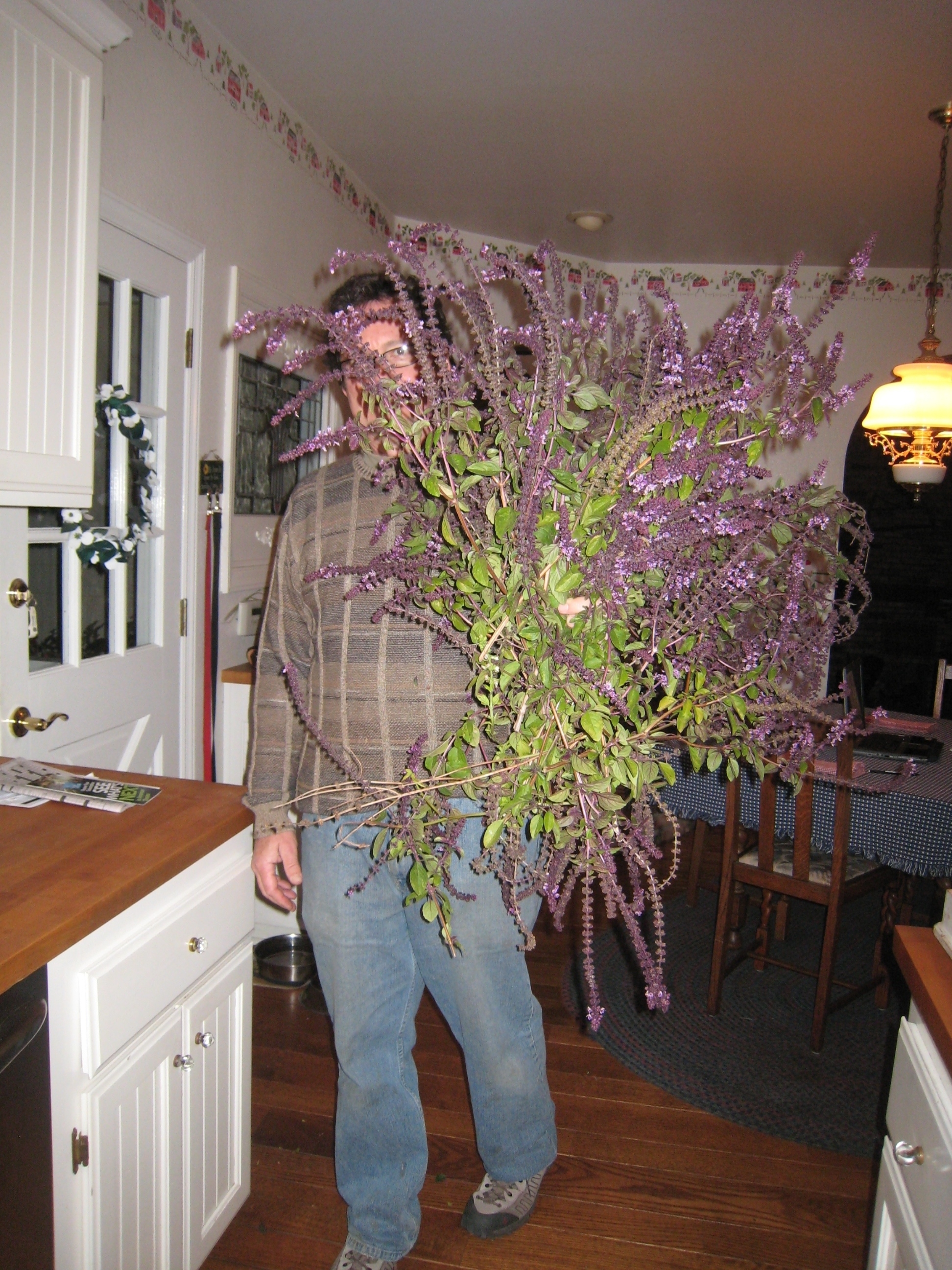
You can’t bring that in here!
Ordinarily I wouldn’t be so blunt, but dinner preparations were well under way. I literally had asked for about two tablespoons of basil to go in the vegetarian chili. Imagine my surprise when he came in with this. Happily he saw reason and after I harvested a handful of leaves, he took the basil back outside. Sometimes harvest management means just saying no.
Let Us Eat Lettuce
Cool weather has arrived in most of the United States. Here in Southern California the gardener has begun the lettuce harvest.
In 36 years of harvest management I have yet to find a yummy way to preserve lettuce. There’s nothing for it but to eat up. Salad’s are an obvious choice, but a fresh tossed salad can only use just so much lettuce. I have two recipes for Wilted Lettuce that make a nice warm salad that uses lots of lettuce, even for just two people.
 Wilted Salad – This recipe comes from my Mom’s 1948 Betty Crocker Cookbook, page 374. Thanks, Mom!
Fry 4 slices bacon, cut up, until crisp.
Add 1/4 cup vinegar, 2 tbsp. water.
Heat.
Pour over 1 qt. shredded lettuce tossed with 2 green onions, chopped, 1 tsp. salt, pepper.
Sprinkle 1 chopped hard-cooked egg over top.
Betty Crocker fails to mention this, but you will want to serve right away. This salad does not get better with age.
Vegan Wilted Lettuce Salad – I found this recipe one day when I wanted to make wilted salad but had no bacon. I like it a lot and use it often, even if I do have bacon in the house.
2-3 heads leaf lettuce
salt and pepper to taste
1/4 to 1/2 cup balsamic vinegar
1/4 to 1/2 cup water
1 tablespoon to 1/4 cup sugar
3 tablespoons olive oil
1/2 cup finely chopped white or red onions (I’ve used yellow to no ill effect)
2 drops liquid smoke
Wash, dry lettuce and cut into strips or ribbons. Please in a large bowl and sprinkle with salt and pepper
Measure vinegar, water, and sugar into a small bowl and mix.
In a fry pan bring olive oil to temperature over medium high to high heat. Add onions. Coat the onions with oil and let them sit for 1 or 2 minutes until they begin to crisp. Now stir the onions around a bit until they crisp and brown. When the onions are ready, pour in the liquid mixture. Stir.
Bring to a boil, remove from heat, add liquid smoke.
Pour over the lettuce, mix, and serve.
I adapted this recipe from Cooks.com
Kale – Another member of the cole family
Cole crops are those related to the cabbage. Cole comes from the Latin caulis meaning cabbage.
The cole crops include broccoli, cauliflower, collard greens, Brussels sprouts, kolhrabi, and kale. According to An A-Z of Food & Drink from Oxford University Press, kale is largely associated with Scotland. I’m not going to get into all of the nutritional benefits of cole crops. That might take the fun out of this very tasty vegetable. Just eat and enjoy.
Kale is a great cool weather crop, and in some climates it’s being harvested now. A large bunch of kale that may fill the kitchen sink will cook down nicely to serve 4-6 people. Here’s all you do.
- Wash the leaves and strip out the center stem.
- Stack the leaves on top of each other and cut into thin strips.
- Heat a bit of olive oil in a pan, add chopped garlic and diced onions.
- Add the kale by handfuls. Saute until the kale is wilted but still bright green.
- Add salt and fresh ground pepper to taste and serve.
This whole process takes about 8 to 10 minutes. Don’t overcook.
Kale cooked this way will also freeze nicely and keep for a couple of months.
If you really want the info on nutritional benefits, let me know. It’s all good news.
Thyme for Gift Giving
Everyone needs the gift of thyme. “When in doubt, use thyme” says the Grass Roots Herb Society Newsletter. My sources support that advice, as thyme works well with “veal, lamb, beef, poultry, fish, poultry stuffing, pates, sausages, stews, soups, stocks, bread, herbed butters, herbed mayonnaise, flavored vinegars, mustard, and bean and lentil casseroles. Use it with tomatoes, onions, cucumbers, carrots, eggplant, parsnips, leeks, mushrooms, asparagus, green beans, broccoli, sweet peppers, potatoes, spinach, corn, peas, cheese, eggs, and rice. Its flavor blends well with those of lemon, garlic, and basil.” (Rodale’s Illustrated Encyclopedia of Herbs, p488.)
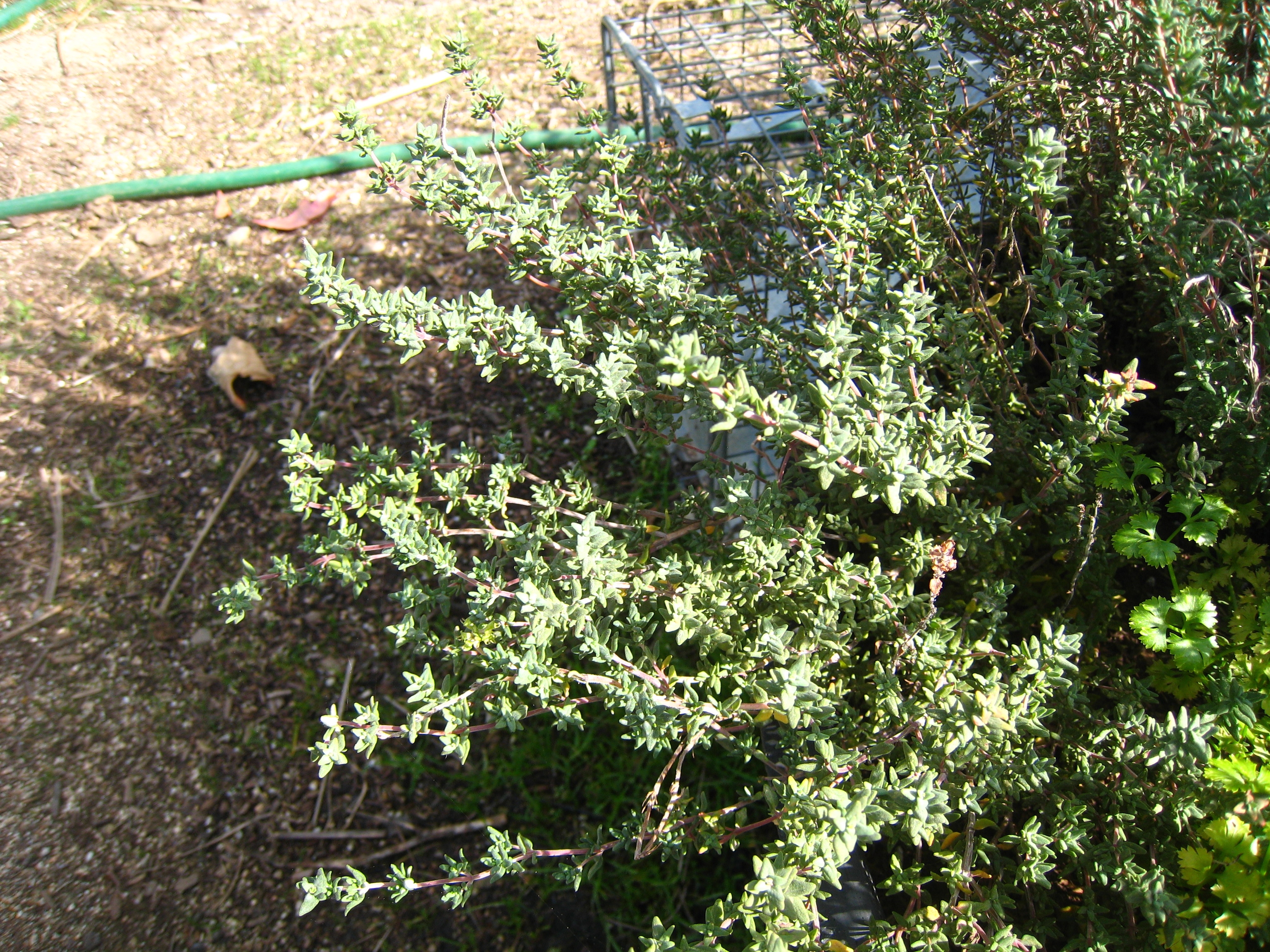
Thyme ready for harvest, December 1
Any harvest manager who can’t find a use for thyme just isn’t trying.
This harvest manager will be drying thyme and packaging it for Christmas gifts. The non-cooks among us can use thyme in herbal lotions or baths for its stimulating properties.
To dry fresh thyme, use a food dehydrator at 90 to 100 degrees for one to two hours. Alternatively, you can hang bundles in a warm, dark place for 5 to 10 days. Oven drying is a risky business. The inability to maintain a constant, low temperature in an oven results in the loss of essential oils from the herb.
Bay Leaves a.k.a. Laurus nobilis
The renowned (nobilis) bay (Laurus) tree delivers the versatile leaves that we often use in soups, stews, Italian dishes, and shellfish boils. The gardener has recently obtained a bay tree that’s actually pretty handy to have around. Picking bay leaves for the kitchen on an ‘as needed’ basis makes for very fresh, tasty additions to lots of meals.
This year I have a plan to harvest enough leaves to dry and pack in herb tins for Christmas gifts. I got a good deal on food grade tins from Specialty Bottle. They have a nice flat, rectangular tin that will work well for bay leaves.
Tin containers from Specialty Bottle
There are several options for drying the leaves. I like to use my food dehydrator at about 90 degrees for a couple of hours. Alternative methods include hanging branches upside down inside of a paper bag with half inch holes cut in it. Hung in a warm place, the leaves should be dry in 5 to 10 days. Some sources suggest laying the leaves out flat and placing boards on them so that they do not curl during the drying process. This method can take up to 15 days.
Ultimately the leaves should be stored in a dark, airtight container to retain their flavor.
The Vigilante Gardner
This under three minute video definitely merits a look. Brooklyn resident Todd Bieber planted a vegetable garden in a tiny patch of unused ground near his apartment. He went out at midnight in order to stay under the radar, so to speak.
Vigilante Gardner Part 1 shows the clandestine planting.
 Vigilante Gardner Part 2: A Thief, A Dirty Old Man, and God tells how the garden turned out and Todd’s encounter with God.
What do you think? Should Todd be planting vegetables on someone else’s property?
More Parsley Possibilities
Anybody else having a bumper crop of parsley? It’s one of the greatest herbs with a very long history. For instance, ancient Greeks wove it into crowns for victors in athletic games, because they believed Hercules chose parsley for his garlands.
Elizabethan herbalists credited parsely with all sorts of medicinal value including a treatment for coughs, dropsy, insect bites, and to ease earaches when dropped into the ears with wine. While those uses are a little ‘iffy’, parsely will serve as a diuretic. Because it is rich in vitamins, some consider it valuable in easing the pain of arthritis.
To create an infusion pour one quart of boing water over a cup of firmly packed parsley, both leaves and stems. Allow to sit for 15 minutes, then strain and bottle immediately. Cool quickly and refrigerate.
If you really like the taste of parsley, why not use it as the foundation for a salad? Chop parsley, add diced tomatoes, sliced olives, and maybe some
Feta or blue cheese. A little olive oil, lemon juice, and salt serves nicely as a dressing.
Note: The history, medicinal value, and infusion instructions come from The Rodale Herb Book, 1974. (Yes, I’ve been managing the harvest since right about then.)
What do you do with an abundance of parsley? Ideas welcomed!
Avocados
By any measure, a backyard garden with 12 avocado trees will provide a challenge of abundance. How does one preserve the Persea americana?
First let me advise you to share the wealth. Your friends, neighbors (if they don’t have trees of their own), colleagues, and acquaintances will be eternally grateful for the gift of avocados. Here is how three degrees of separation can cause great joy in the world of avocado growers. On Sunday I gave my son a bag of 10 or 12 avocados. He ate one for dinner (I’ve included the picture he sent) and apparently he also took some to work. Someone at work took one home. Someone at home is a colleague of mine. She ate an avocado for lunch today and sent me the following message:
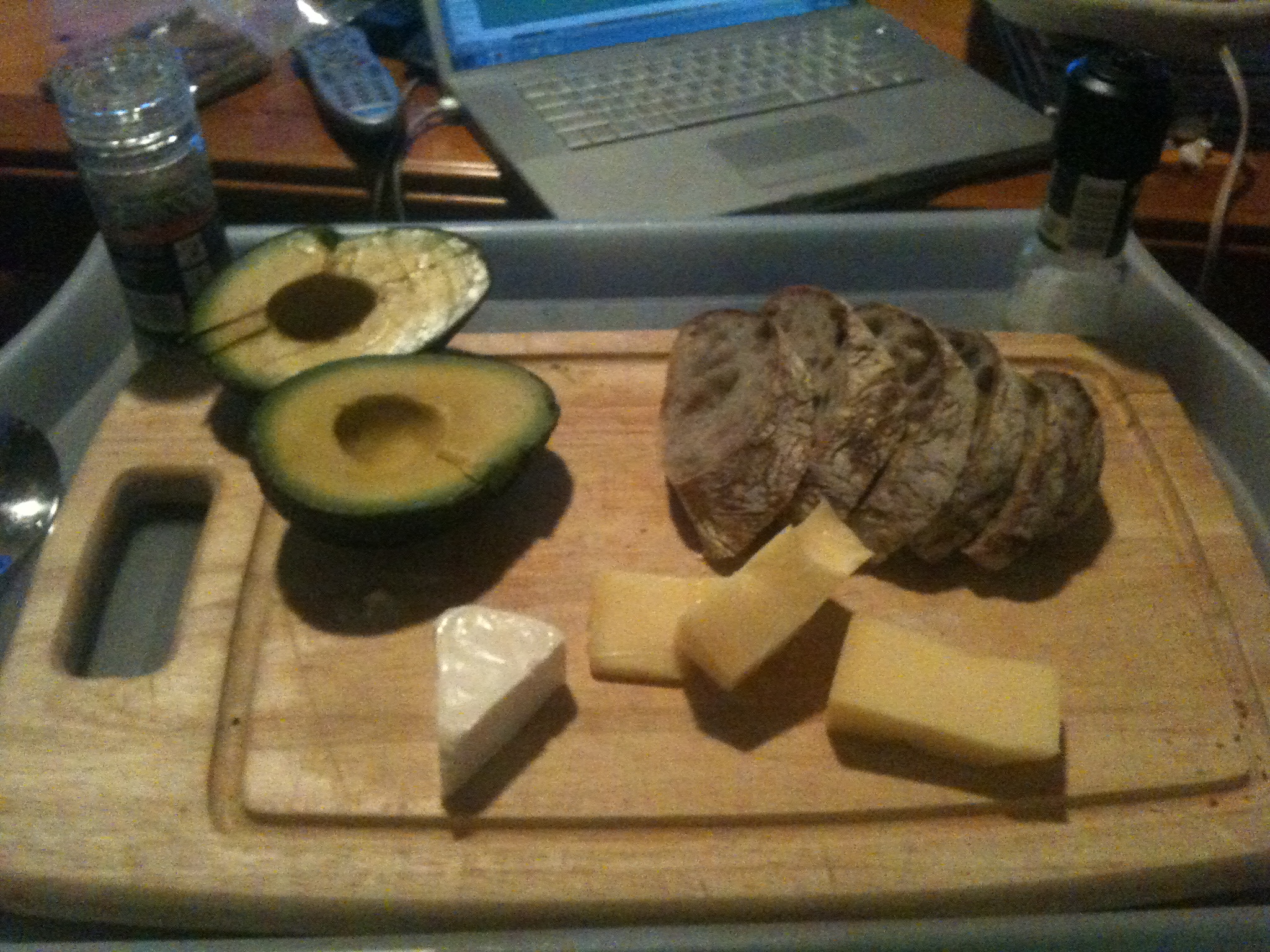
The ABCs of Supper - Avocado, Bread, Cheese
I just had to email and thank you, because I am eating an avocado from your tree right now, and it is phenomenal! Anytime you have extras, you know where to send em!
See how happy everyone is? (Thanks to Amy Bethancourt for sharing her appreciation.)
We grow Haas avocados. They have a tough peel, a nice long shelf life, and are overall pretty tasty. They can take up to 10 days to ripen after picking, so they store nicely. Judicious picking can yield a steady stream of ripe avocados in the kitchen.
It turns out you can also freeze avocados. Here’s the method, according to Stocking Up by Carol Hupping.
Choose those that are ripe and perfect. Peel, halve, and remove pits. Scoop out the pulp and mash it, adding lemon juice or rose hips concentrate to prevent browning. Pack and freeze.
I haven’t actually done this myself, but I’m guessing thawed avocado would work well in guacamole.


 Save the Harvest