Quiet in the Kitchen
The kitchen has been fairly quiet these last couple of weeks as the gardener works to clear out the summer plantings and put in the winter crops. He did recently raid the garlic jar to snag some cloves for planting. Yes, you can do that, although I’m told the risk lies in not knowing exactly what variety you’ve got. I’ll let you know in June how things turned out.
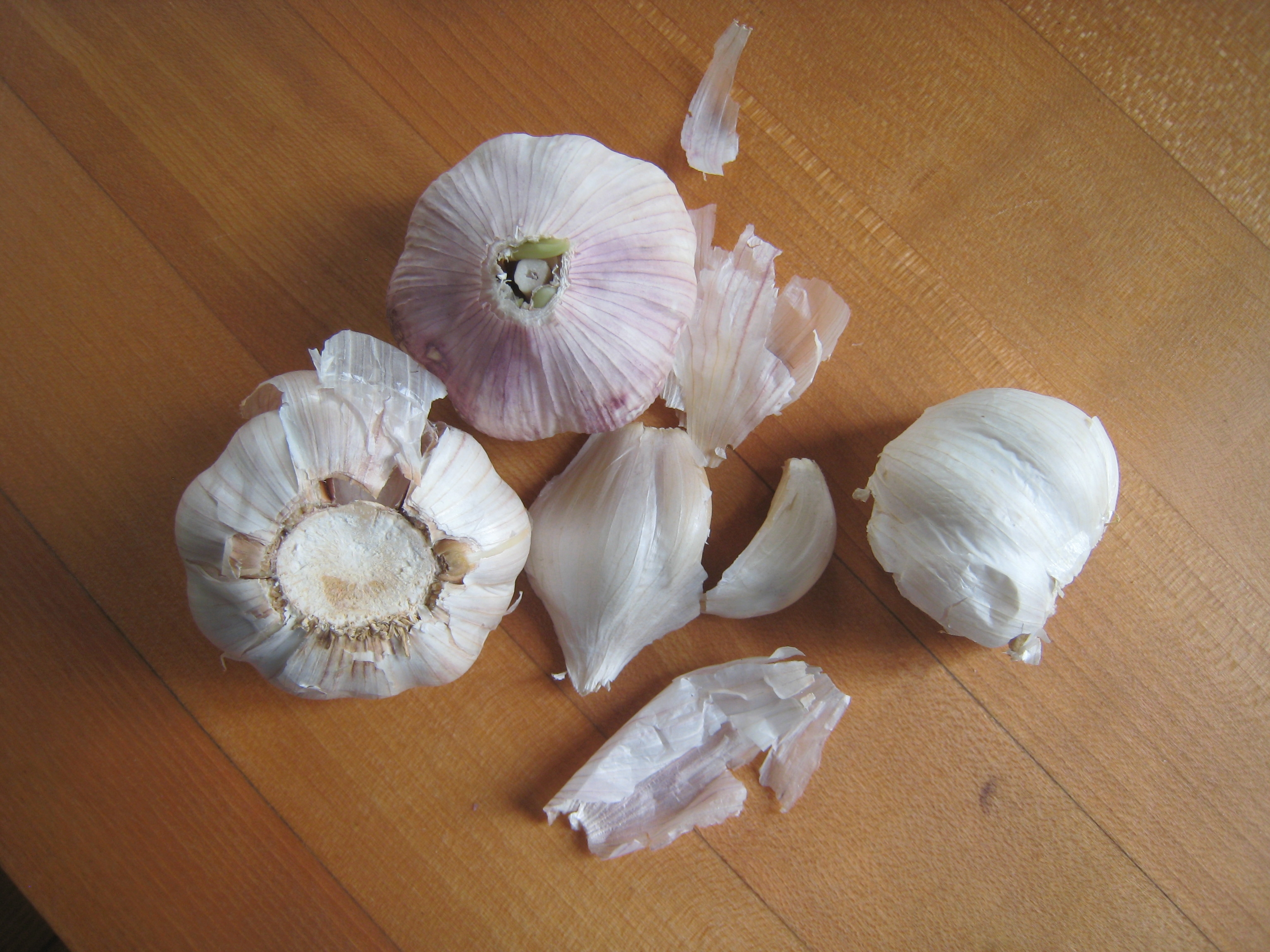
Straight from the garlic jar to the garden
In the meantime, watch for some thoughts on apples. We’re heading up to apple country this weekend and plan to return with a bushel or two. There will be applesauce for sure.
Lemon Grass
The latest produce to enter the kitchen resembled a handful of 1/2″ dowels. They were lemon grass stalks.
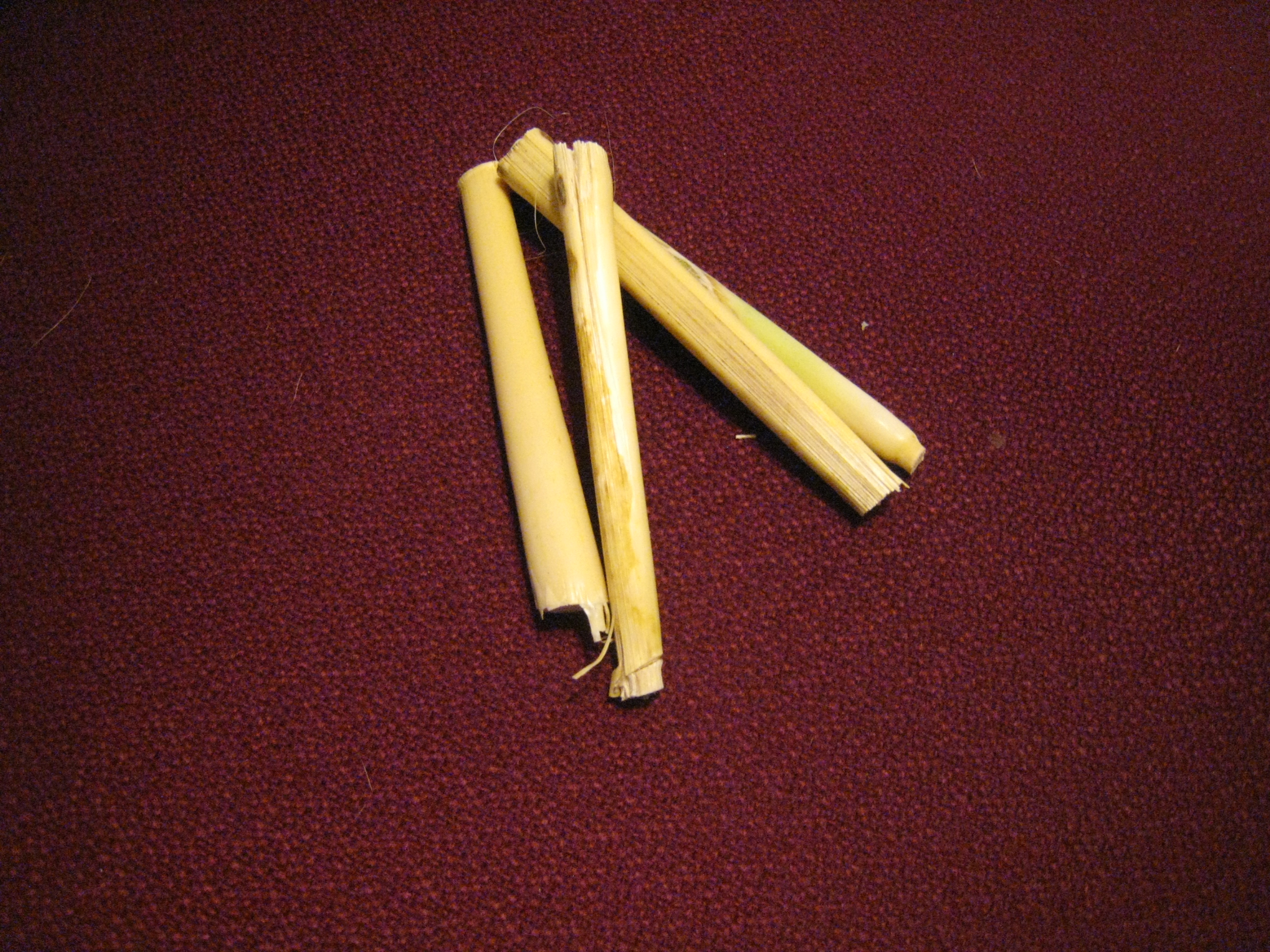
To see pictures of lemon grass in all its splendor, try searching Google Images. Just enter lemon grass in the search box and marvel. (Note lemongrass will also work.) Try to ignore that bottle of McCormick seasoning that comes up in the search results. That’s not the lemon grass you’re looking for.
The gardener is just getting the hang of growing and harvesting lemon grass, and I’m pretty sure there’s lots to learn. We’ve already learned not to put it in the ground, but put it in a pot. This stuff can spread like nobody’s business. We’ve also learned to trim it from time to time with hedge clippers to keep the plant tidy and manageable.
This particular harvest of lemon grass went into the cavity of a gutted whole fish that we cooked on the grill. Yummy!
The tender lemon grass leaves also make a nice tea. Just pour boiling water over the leaves and let steep for 10 minutes or so. Then remove the leaves. Drink it hot or chill it for a very refreshing drink.
Beets are Usually Better Canned
According to one of my all time favorite books on food preservation*, “beets are usually better canned.” Right about now I’d call that an understatement.
Last Spring when the beet harvest filled the kitchen, this harvest manager launched into serious preservation mode. Beet roots will actually store for a good while in a cool place, but for some reason it seemed like a good idea to freeze the abundance. I cooked them long enough to soften the skins, then peeled, quartered, and froze the quartered beets in freezer bags.
One evening last week we cooked up some of the frozen beets for dinner. The results were not satisfying. These beets were grey and flabby, neither pretty nor tasty. Alas, these beets would surely have been better canned.
Here’s my guess. Most of us are not going to grow enough beets that we need worry about dramatic preservation methods. Storing them in a cool dark place will work for most of us. You don’t even have to wash them first. Just cut off the tops, leaving an inch or two above the beet, and you’re good to go.
*Stocking Up by Carol Hupping and the staff of the Rodale Food Center.
Stocking Up notes that beets freeze better when thoroughly cooked first.
Food Swap – What are they going to think of next?
Fellow harvest managers, here’s a fabulous idea for working with nature’s abundance – The Food Swap. We’ve talked about co-ops and food banks for distributing back yard produce, but Food In Jars describes a food swap recently held in Philadelphia. Food swaps offer all kinds of prepared foods including preserves, granola, yogurt, breads, and more.
Although I have imagined such an event, I had never heard of one actually happening, so I followed the link to Hip Girl’s Guide to Homemaking on how to host a food swap. It’s really not unlike the traditional holiday cookie swap. Bring food and trade. Of course there are some logistics to consider, but why not start small? Invite a few friends over. Ask them to bring some food. Swap.
Maybe you could start by attending a food swap in your area to get the hang of it. Kate Payne at Hip Girl’s provides a list that includes at least 18 states.
Who knows where this could lead?
Anaheim Chilies About to Become Red Pepper Flakes
Today the gardener harvested Anaheim chilies and brought the abundance into the kitchen. It’s time to make pepper flakes.
- Anaheim Chilies
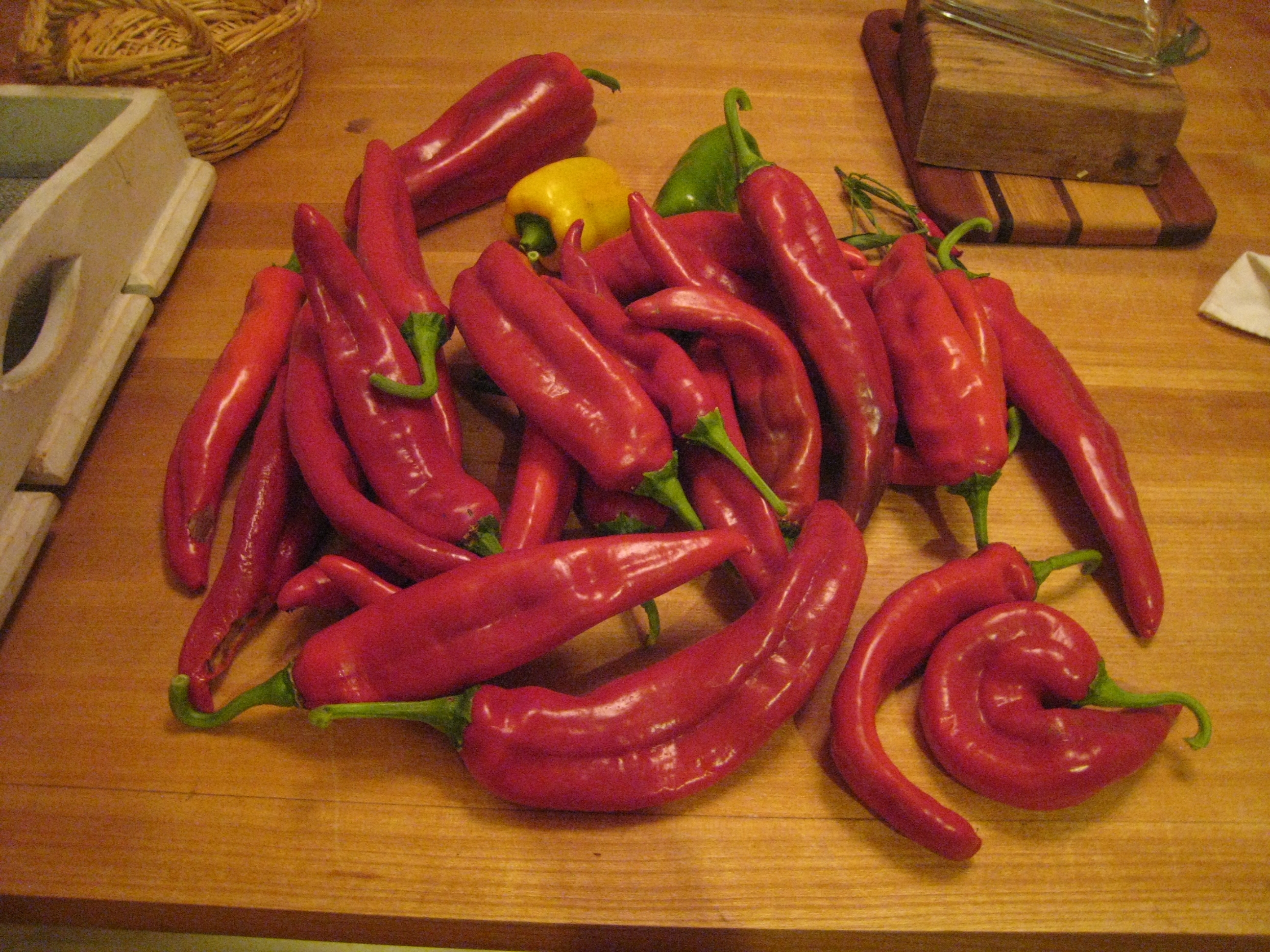
I use a food dehydrator to dry the chilies – 130 degrees until dry, dry, dry. To prep them for the dehydrator, just wash, cut the tops off, and cut them so they fit on the trays. It’s OK to leave them whole if they’ll fit.
If you don’t have a dehydrator, you can use the oven. Use the lowest possible temperature in an electric oven. The pilot light can provide enough heat in a gas oven, but you need at least 130 degrees. Arrange them on baking sheets and leave them overnight.
When the peppers have dried completely, whirl them in a food processor until you have flakes. That’s it. Done.
Beware of the Front Yard Gardener – Really?
Bear with me fellow harvest managers, while we stand in solidarity with a front yard gardener.
The front yard garden of Adam Guerrero in Memphis TN has been labeled a crime scene. He’s accused of violating city ordinances 48-38 and 48-97 for failure to maintain “a clean and sanitary condition free from any accumulation of rubbish or garbage”.

High school math teacher Guerrero uses the garden as a teaching tool, but now he’s been ordered to remove it by September 23rd.
Visit the Kitchen Garderner‘s blog to see how you can help Adam keep his garden. Personally, I’m going start by joining the Facebook page called Save Adam Guerrero’s Garden
Update – More Info on Backyard Produce Not Harvested
Back on September 3rd this blog discussed options to avoid the waste of backyard produce. Well, there’s more going on than we knew, at least in our neck of the woods. Our local National Public Radio website posted “Stocking Needy Kitchens With Low Hanging Fruit” today from Voice of San Diego.
The article offered the following inspirational examples of how to share abundance:
Harvesting San Diego sponsored by San Diego Food Not Lawns connects local fruit tree owners that have excess fruit with a local food assistance program, the International Rescue Committee.
Crop Swap Carlsbad is a neighborhood harvesting program in North San Diego County. They take excess fruit from donors and bring it to food banks. Crop Swap Carlsbad currently seeks fruit tree (citrus + avocado) owners to donate their bounty.
Fresh Food for Families San Diego is a community service program provided by the Housing Opportunities Collaborative that harvests fruit and vegetables from residential properties within San Diego County. All of the harvested fruit and vegetables are donated to local community organizations that distribute it to people in need. Started in early 2011, Fresh Food for Families has already harvested and distributed over 2,000 pounds of food.
Are we ready to get picking?
You’ve Been Warned – The Peppers are Coming
Yesterday my gardener announced that the pepper crop will come in soon. “What kind of peppers?” I asked with some trepidation. “I can’t remember all of the kinds I planted – bell, Hungarian wax, Italian [what?], Jalapeno, Serrano, and some others” he said nonchalantly.
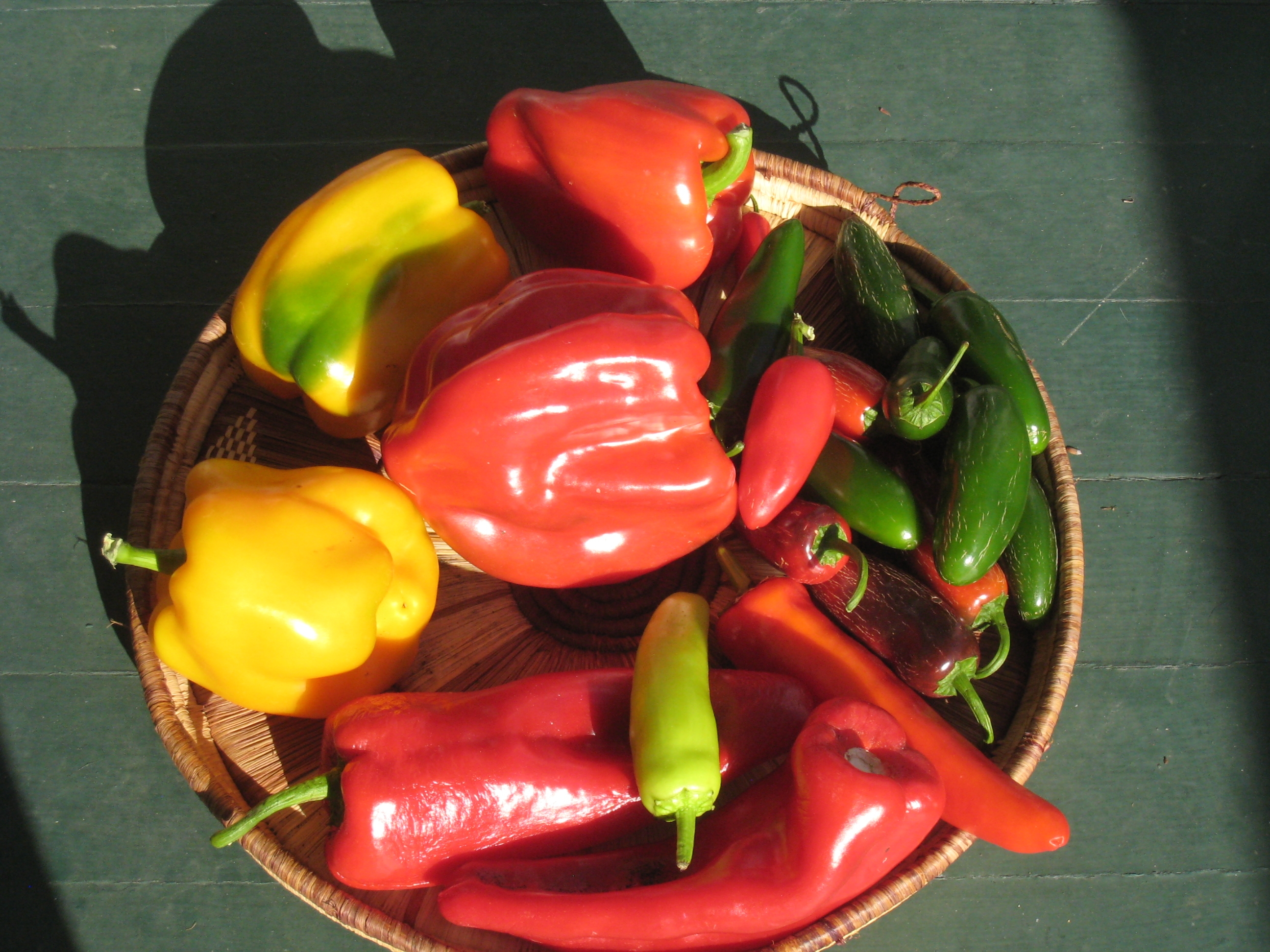
Yellow and red bells (top left), red and green Jalapenos (right), Hungarian wax, and Italian (bottom)
Alrighty then. Bring ’em on. Last night we had stuffed bell peppers for dinner (cooked in the double boiler on the gas stove due to the massive Southwestern U.S. power outage). They were yummy, but that only used up two peppers. Here’s the good news. Peppers actually freeze nicely. Here are a couple of quick options:
Bell Peppers – wash, core, dice, and lay out on a sheet that fits in the freezer. After about 10 minutes in the freezer, scoop the diced peppers into a freezer bag. Now you have already diced peppers to use once the fresh ones are gone.
Hot Peppers such as Serrano and Jalapeno – wash, dry, and toss into a freezer bag or other freezer container. They’ll go great in soup, stew, or even a stir fry when the cooler weather hits.
In another column I’ll share some tips on making your own red pepper flakes. In the meantime, save those empty spice jars.
Managing the Tomato Workflow
Practice makes perfect. After decades of peeling, bagging, and freezing tomatoes, I’ve got a bit of a system. Here it is, for your consideration.
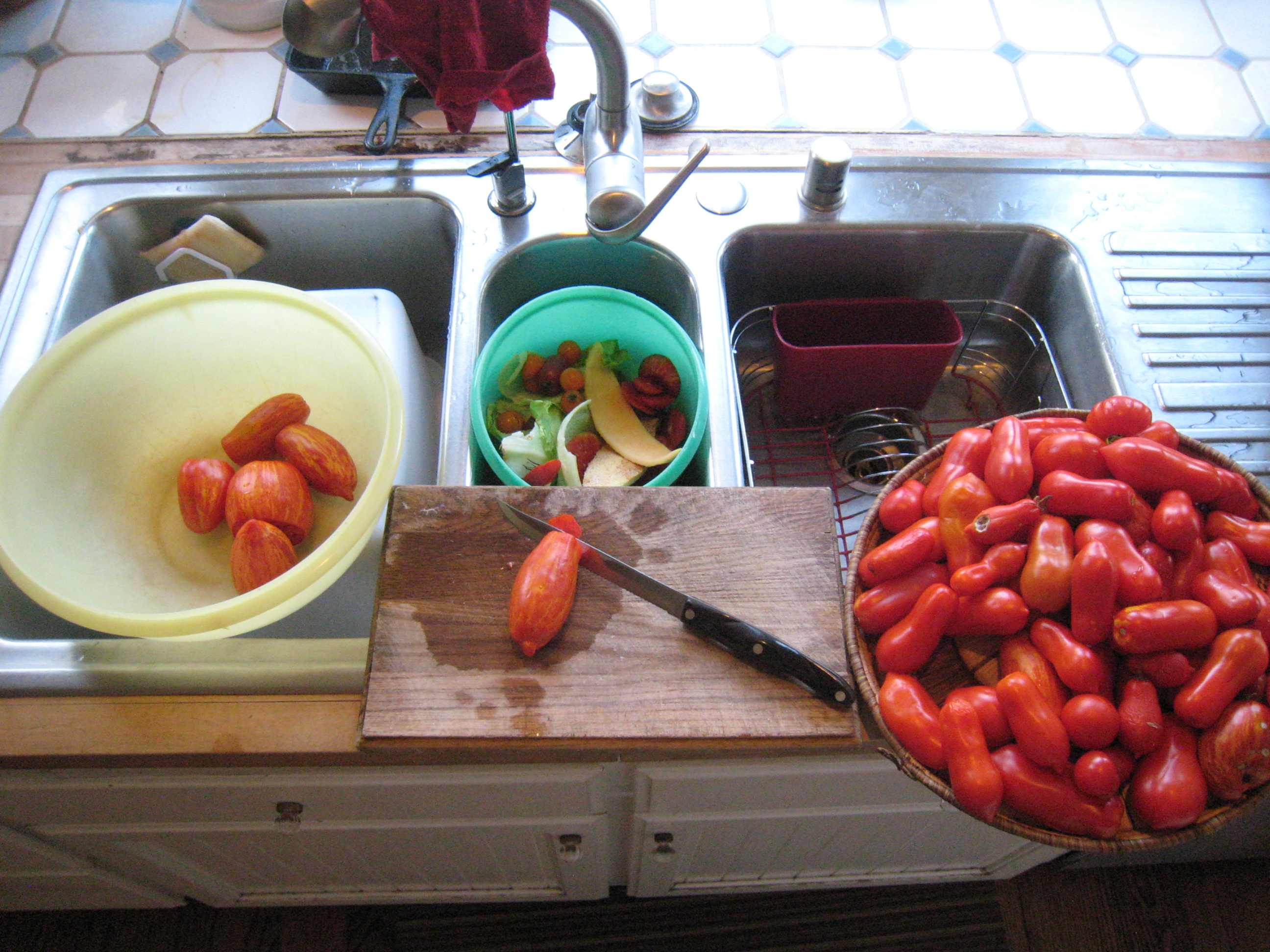
I recommend a four point system to stage, cut, toss, and collect.
Since I’m right handed, I stage the washed tomatoes on my right, the cutting surface in front of me, the compost catcher (green bowl) in front of that, and the collection bowl on the left.
Pick up the knife in your right hand (the cutting hand), pick up a tomato in your left hand, cut the top off or core it, toss the top/core into the compost catcher, and drop the tomato into the collection bowl. You can get quite a rhythm going and work through several pounds of tomatoes in short order.
The tomatoes in the collection bowl are now ready for whatever comes next. In this case, we’re going to peel them.
Note that the tops or cores go into the compost bowl, which of course goes outside into your gardener’s compost pile. I will fore go showing you a picture of my gardener’s compost pile. Maybe we’ll save that for another posting.
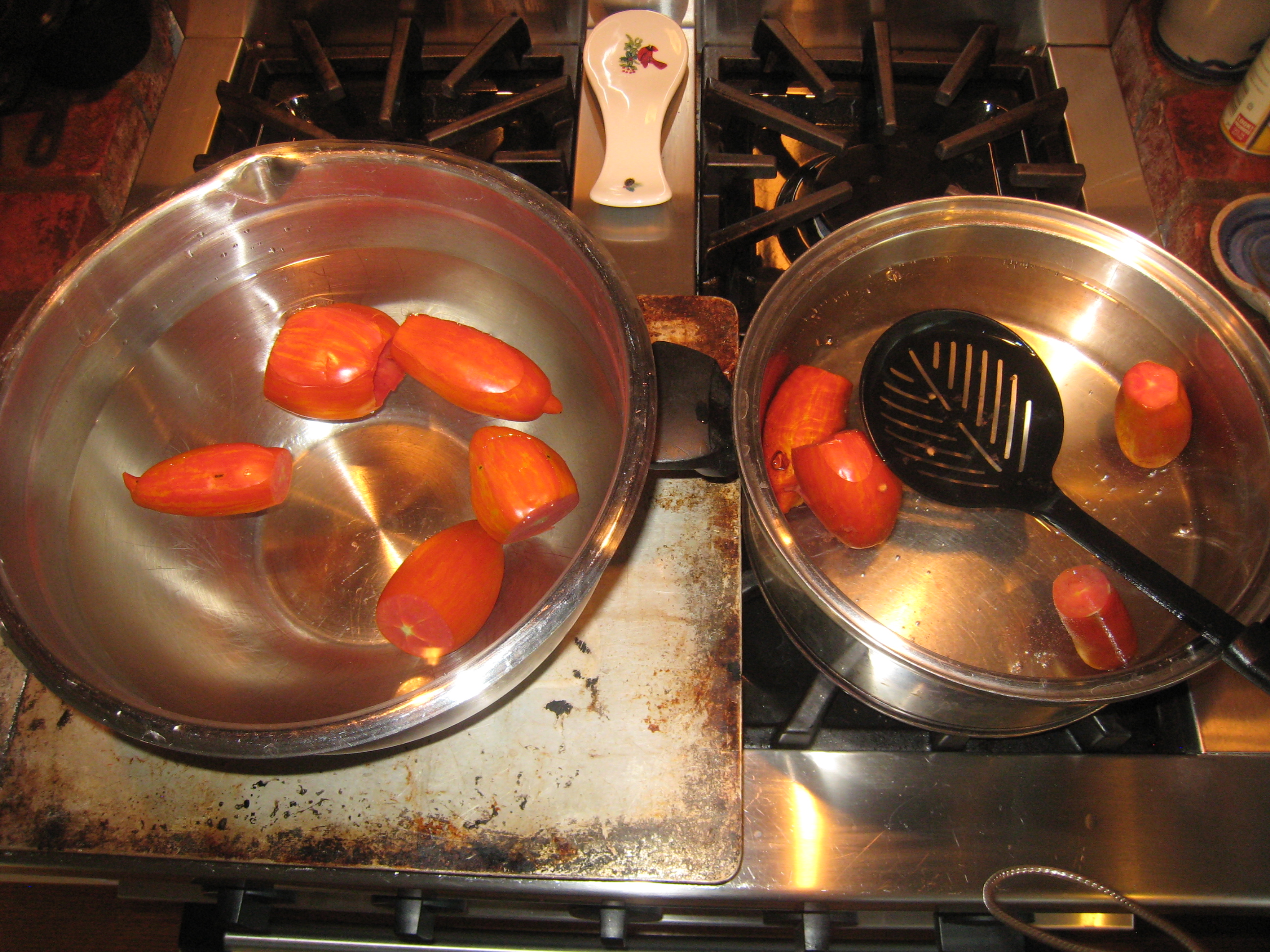
Cool water on left, boiling water on right
Here’s how the peeling process looks. Notice that I have placed a cookie sheet under the cool water bowl on the left. Lower a few tomatoes into the boiling water. Leave them for about 30 seconds, then use a slotted spoon to move them into the cool water. Put the next several tomatoes into the boiling water. You can peel the tomatoes in the cool water while you wait for the ones in the boiling water. I leave the peels in the cool water and drop the peel tomatoes into another collection bowl.
When you are finished you will have a bowl full of peelings and cool water. Pour this on the compost pile.
You will also have a collection bowl of peeled tomatoes. These are now ready to freeze or otherwise use as needed.


 Save the Harvest