Mint: and you thought it was a happy plant
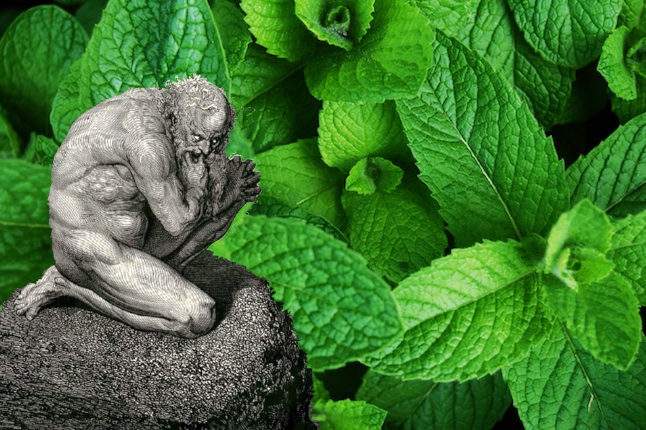 Who knew that mint, a most refreshing, grows-everywhere-herb that we all love, has such a sad history born of a jealous rage. At least, so says Greek mythology.
Bon Apetit tells the story of Hades, Minthe, Persephone and how mint was named. I can’t do it justice without massive quoting form this short, readable article, so please do go to the original blog post and read all about it. It’s interesting to consider Hades as a peacemaker between his two lady friends. Nuf said.
What do you do with all that dill?
Dear Save the Harvest Readers, today we welcome guest blogger A.J. Hardy, DVM to answer this oft asked question. When it came up at dinner the other evening, A.J. said simply:
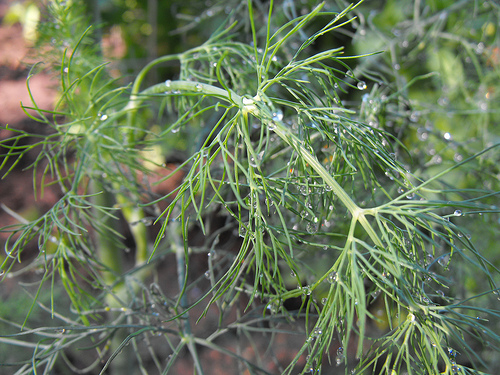
kimll, 2010 Flickr
“Put the dill on a paper towel. Put another paper towel on top. Put it in the microwave for four minutes, and you’re done. Dried dill.”
A.J. is a man of few words, but wise words they are. This is just the sort of recipe Save the Harvest readers appreciate – simple, fast, and effective.
Thanks, A.J.
For readers who want a step by step discussion including pictures on how to dry dill in the microwave, A.J. refers you to She’s in the Kitchen. Blogger Katrina Hall has all the details.
Edible Landscaping
I’ve been telling The Gardener for years that he should do this – become a backyard gardener consultant.
In the U.S. there are over 50,000 square miles of lawns, and we spend $30 billion a year landscaping those lawns. At least that’s what John Robb says in his blog post What if farmers made house calls. Robb mentions the idea of farmers consulting with homeowners to create sustainable gardens in lieu of lawns.
I’m in favor.
Don’t Panic
Remember that wheelbarrow full of squash and pumpkins that appeared at the back door last fall? It reappeared today with cabbage, lettuce, spinach, and beets. The Gardener is headed out of town for a week, so he undertook some preemptive picking. The Harvest Manager has a cold, and is not operating on all cylinders. So, what shall we do with 15.5 pounds of cabbage, 10 beets complete with luscious tops, three (3) bunches of spinach, and four (4) heads of lettuce?
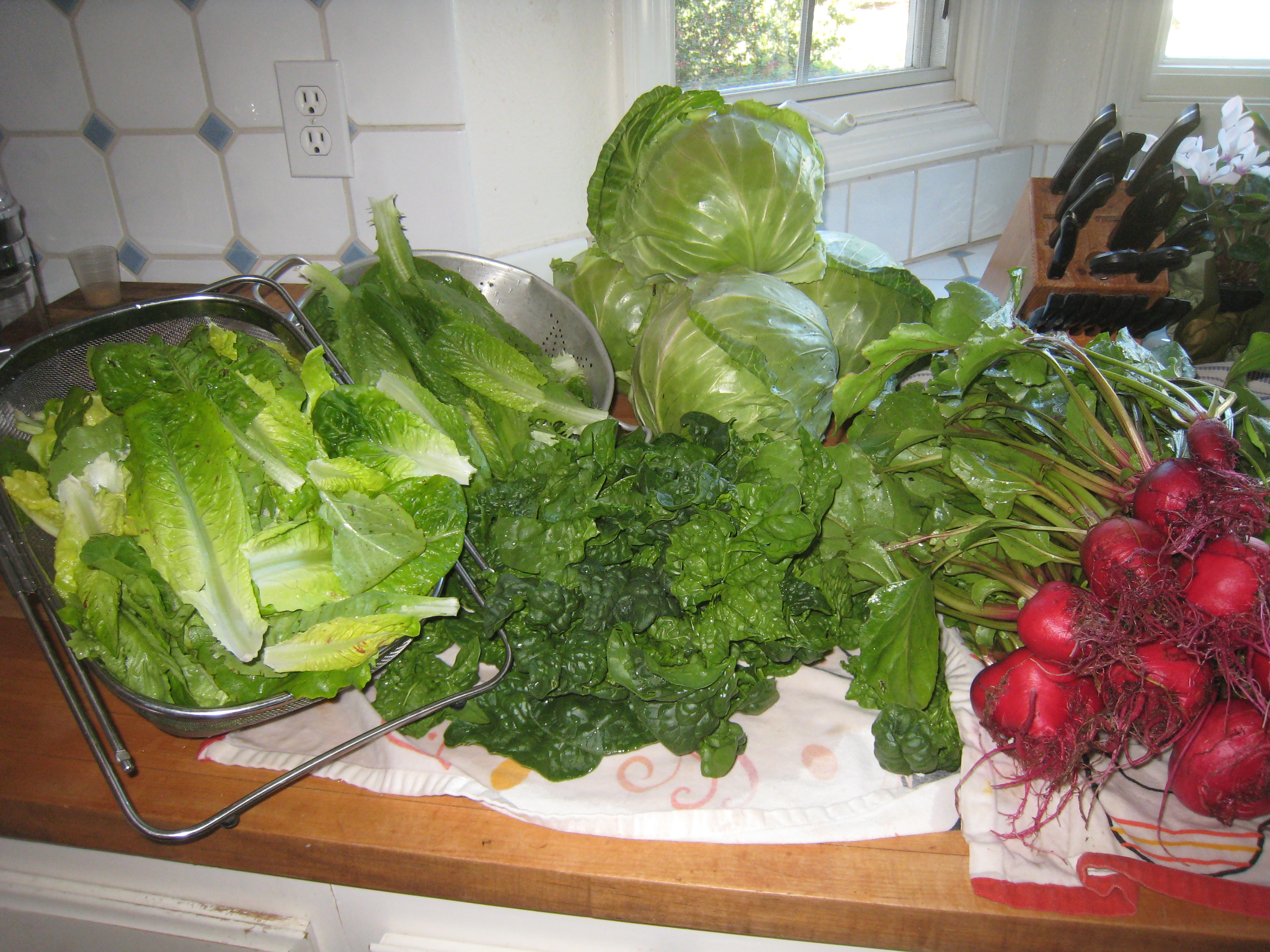
Preemptive Picking as The Gardener Heads Out of Town
First and foremost, don’t panic. All we need is a plan.
Step 1: Call the offspring who live in town to see what we can move from our kitchen to theirs.
Step 2: Wash off the dirt, slugs, and snails. (Yes, this can happen in a largely organic garden.)
Step 3: Steam the spinach. It will cook down to a generous single serving. Recall that The Gardener will be on a plane and not eating his share.
Step 4: Move the rest to the refrigerator and wait to hear from the offspring. The cabbage and beets will keep nicely and with a bit of diligence and the wilted salad recipe, the lettuce will be gone in a few days.
Colorful Cauliflower and other Cole Crops
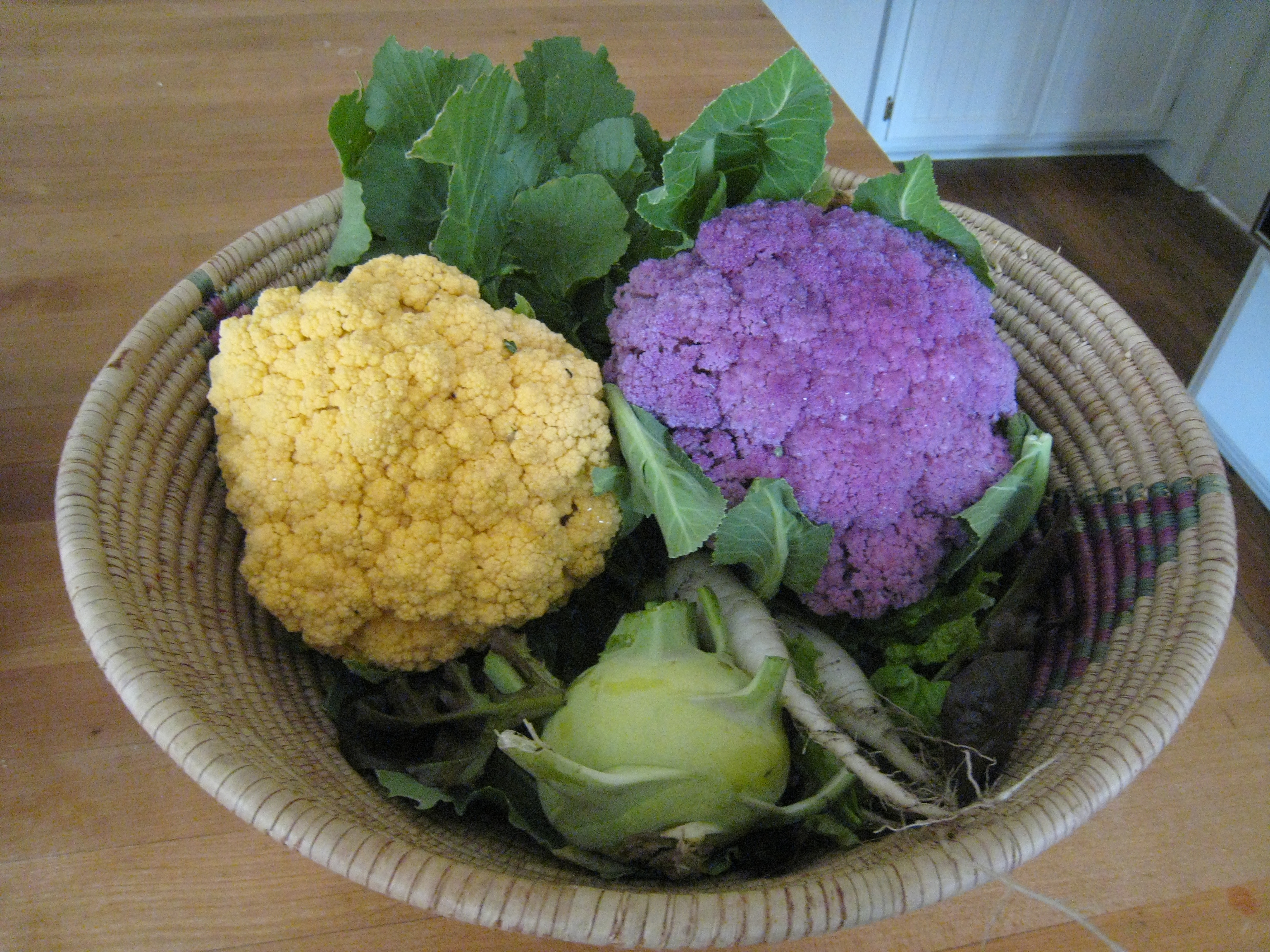
Cheddar and Purple Cauliflower accompanied by kohlrabi and a few white radishes
The cole crops continue to arrive in the kitchen (aka Harvest Management Headquarters).
The Gardener has provided an abundance of kale, broccoli, cauliflower, kohlrabi, and collard greens. Just this week I blanched and froze broccoli florets, sauteed kale with garlic and olive oil, added shredded kale to chicken soup, tossed a few cauliflower florets into a can of Progresso vegetable soup (two days in a row), and sprinkled chopped cauliflower into the daily salad. The collard greens were blanched and frozen a week or two ago, and we’re on break from kohlrabi at the moment (although it is awesome in a salad).
I’m told the cabbage harvest will soon begin. In the meantime, let’s all carry on with blanching, freezing, sauteing, adding, tossing, and sprinkling.
Managing Collards and Kale
Winter crops include members of the cole family such as collards and kale. Cole also includes Brussels sprouts, cabbage, broccoli, and cauliflower. Right now The Gardener is harvesting collards and kale, cauliflower will come later. Collards and kale are rich in beta carotene, vitamins K and C, and calcium.
It’s always best to move as quickly as possible from picking to preserving. This saves nutrients and flavor. This week The Gardener announced that the collards and kale “could be picked any time, but I don’t want to pick until you’re ready to deal with them.” Good plan. As long as they’re safe on the plant, you might as well leave them there. Now I ask myself, is there ever an ideal time to wash, trim, chop, blanch, and freeze a bushel of greens? Lounging around on a Sunday afternoon reading a book is not the destiny of a Harvest Manager. On the assumption that there’s no time like the present, I told The Gardener to bring ’em on.
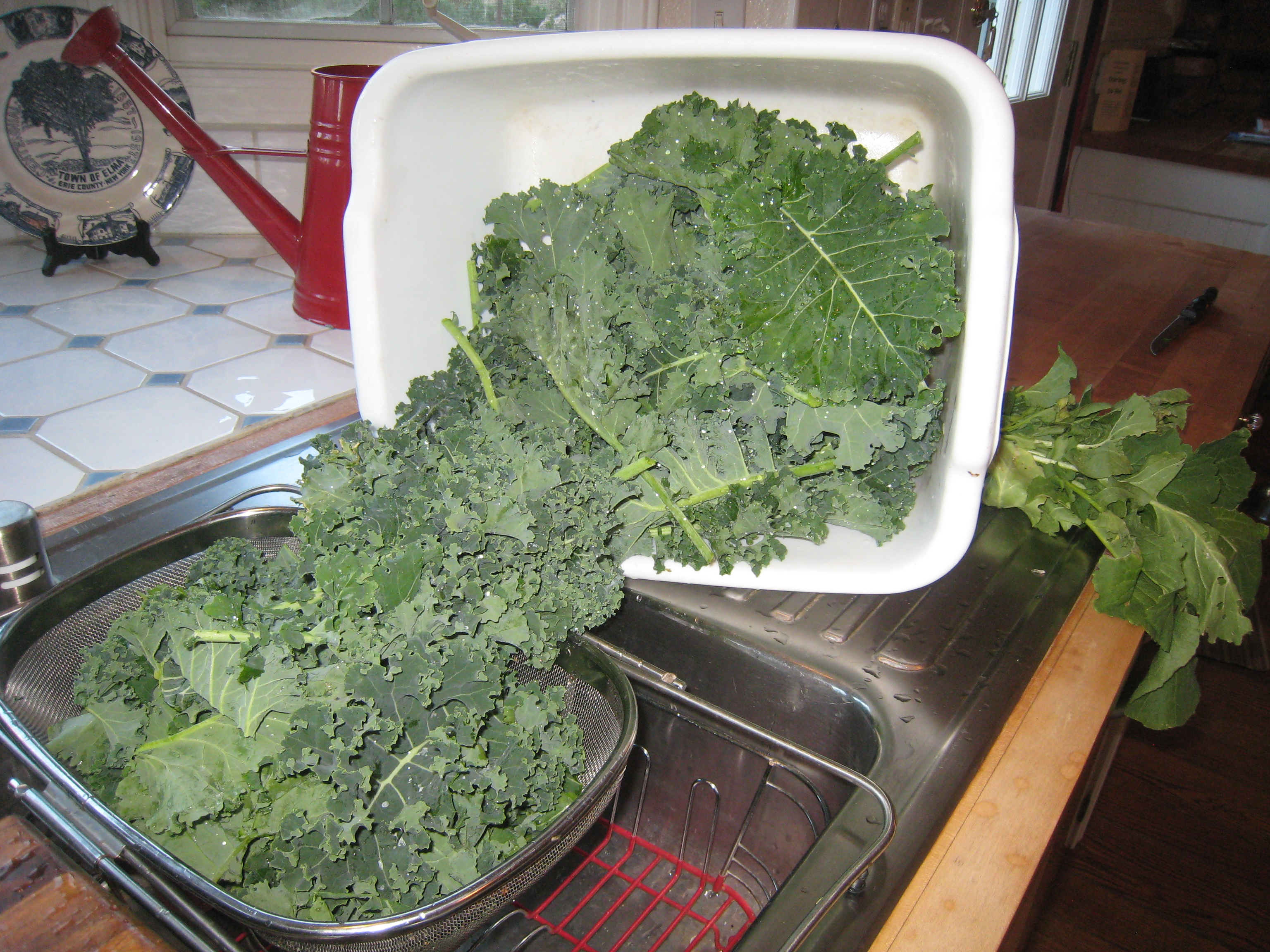
Draining the washed greens
The preservation process is easy enough and requires no special equipment. Simply wash in a basin of water – twice – , and strip out the thick part of the leaf stem. Lay the leaves on top of one another, roll them up, and slice into strips about an inch wide. Blanch them in a pot of boiling water until they wilt or for about two minutes. Drain, cool, and package in freezer containers.
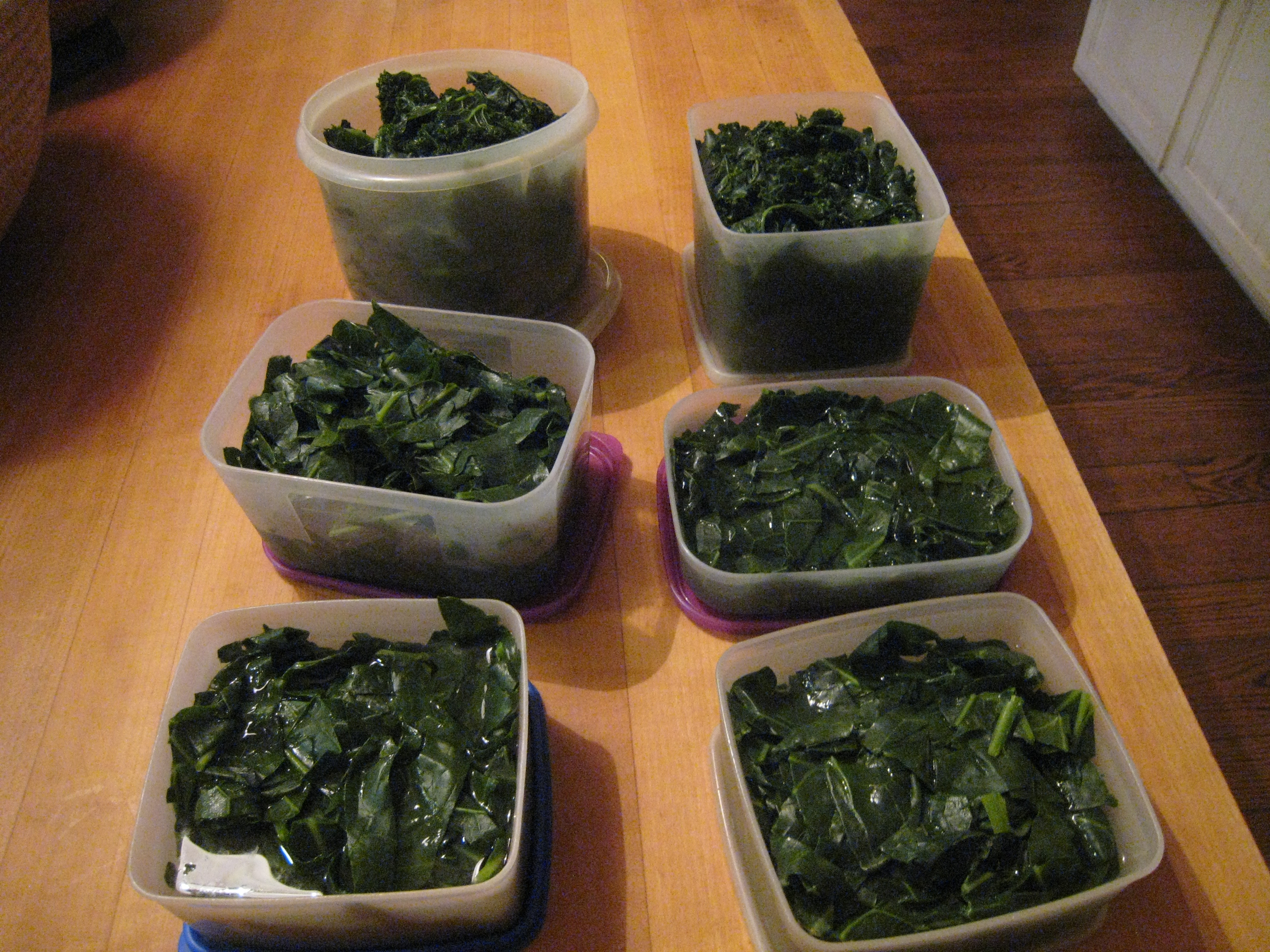
Work first, get it done. Play last, have more fun. Now there’s a chance to get in a little reading time.
Winter’s Green Leafy Vegetables are Coming In
The cole crops have started to arrive in the Harvest Manager’s domain. We had some tasty, although bird laced, kale this week. For some reason the hungry (and for all I know angry) birds have a hankering for green leafy vegetables this year. In 37 years of enabling backyard gardening, I’ve never seen this behavior.
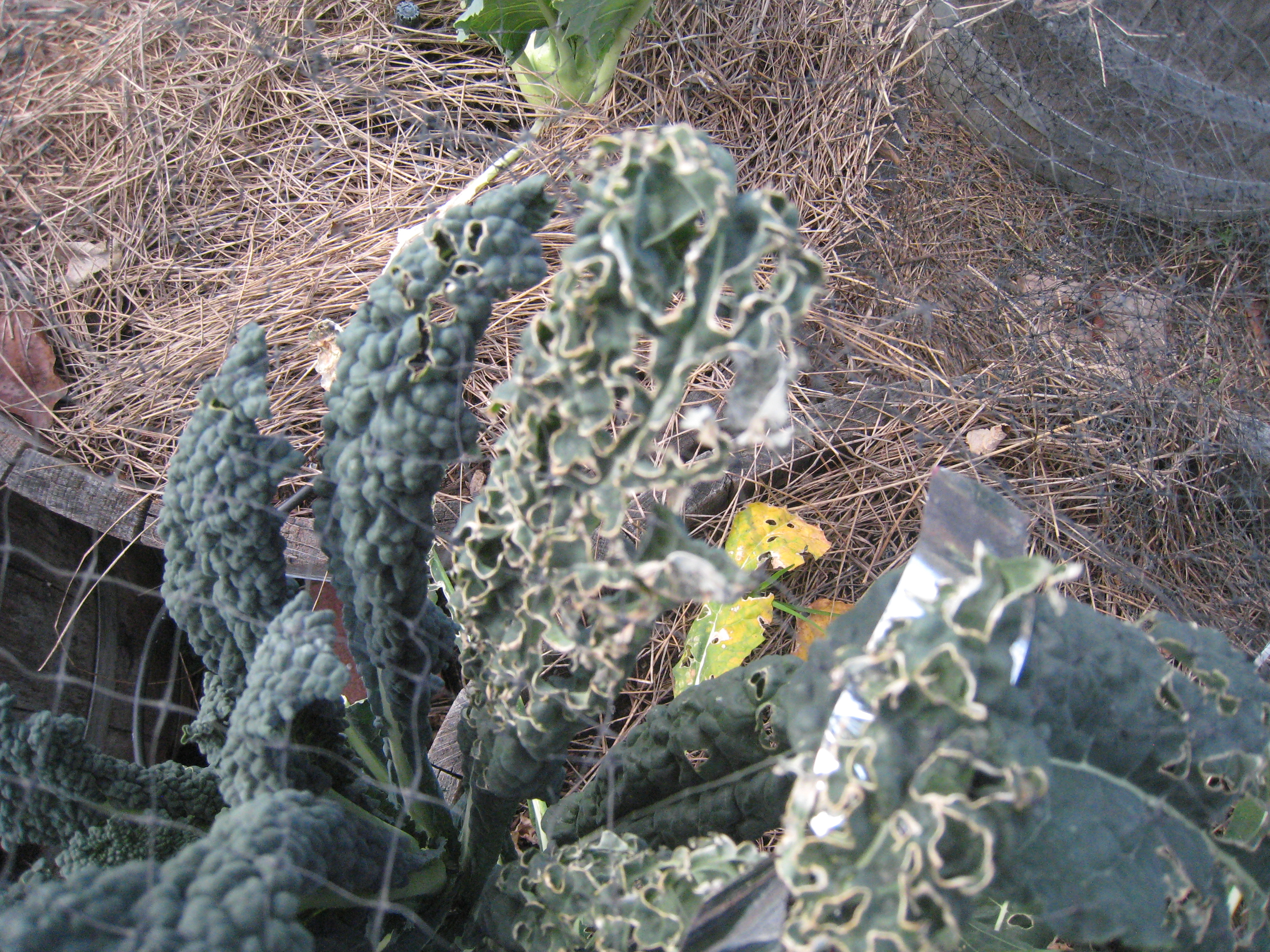
Bird Laced Kale
We sought to fend off the hungry critters with shiny tape. The birds were fooled, but not for long.
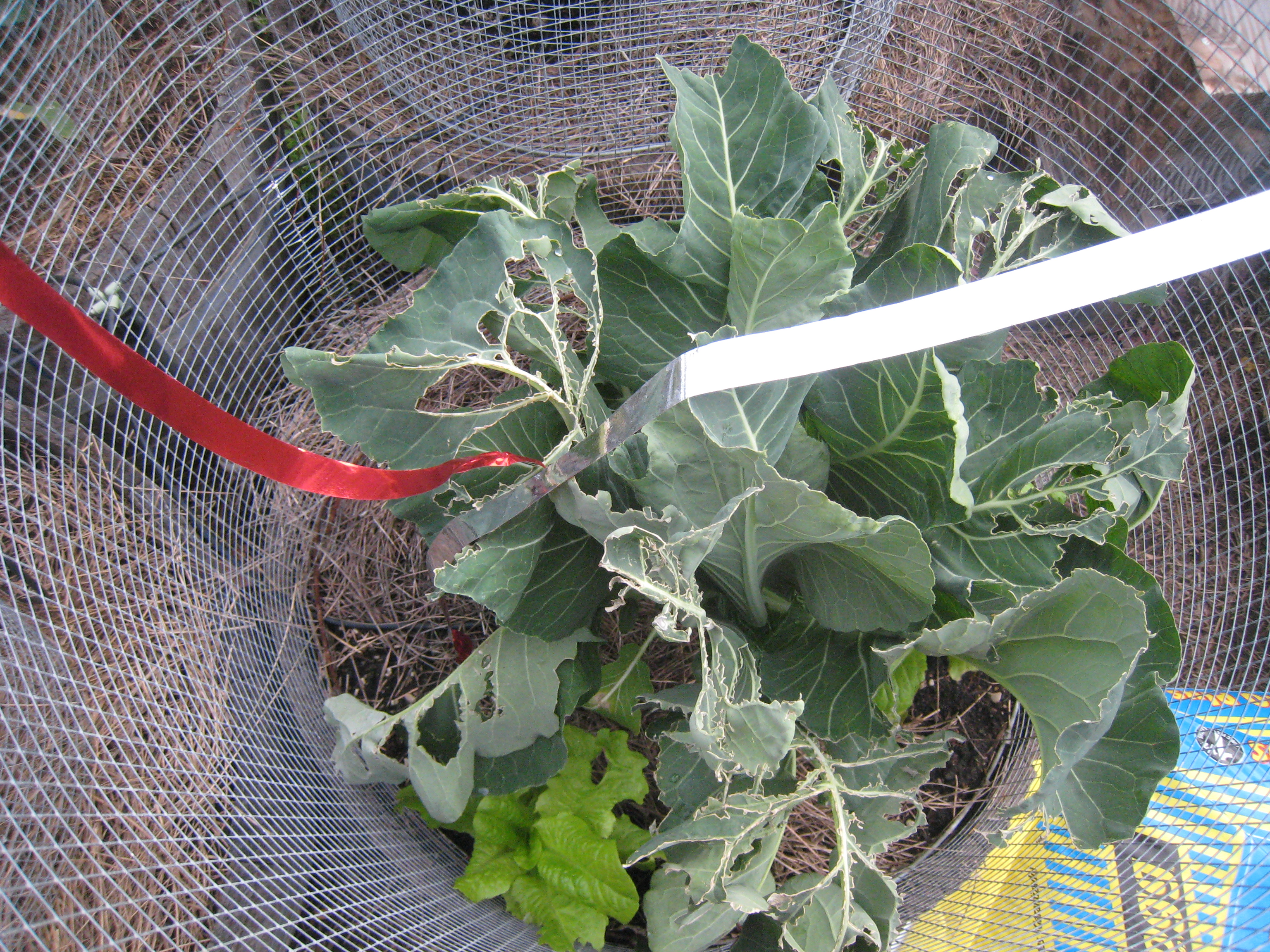
Shiny Ribbons, not fluttering
Earlier this week The Gardener acquired a more convincing deterrent. Day and night the fearsome plastic owl stands guard. It seems to help. The birds are keeping their distance, and for now the cole crops are making a comeback. Special thanks to parents of the Harvest Manager for suggesting the owl solution.

Our Own Owl
Thought For the Day
“Knowledge is knowing a tomato is a fruit. Wisdom is not putting it in a fruit salad.”
British journalist Miles Kington via the New York Times Crossword originally published on December 19, 2012.
The Pumpkin Harvest – Processing
Last night the pumpkin preservation began. (We harvested the squash and pumpkins a few weeks ago.) The Gardener cut up and deseeded the pumpkins while I put the pieces in the oven for roasting.
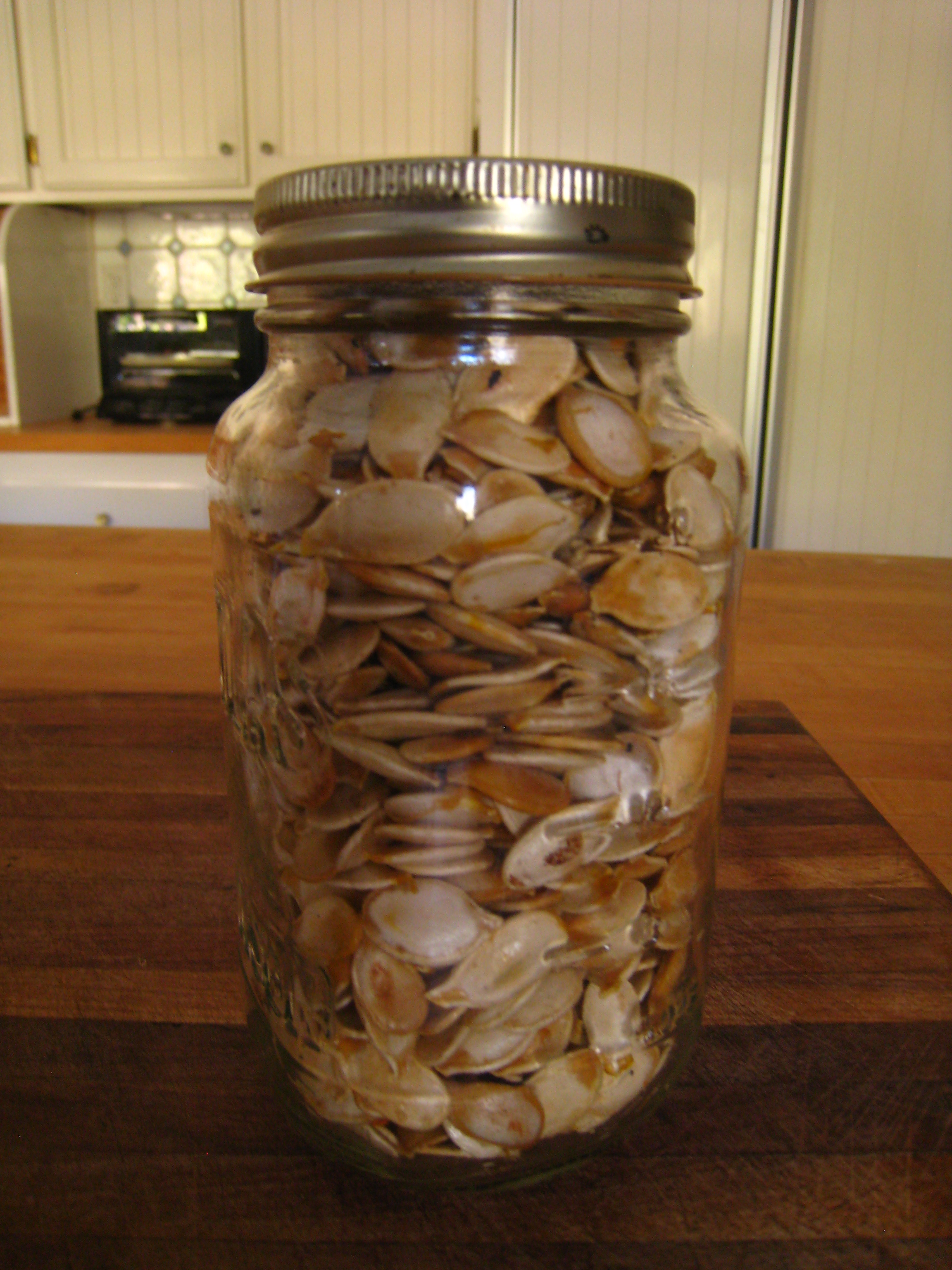
Roasted Pumpkin Seeds
Instructions: Cut side down, 350 degrees, 30 minutes or so.
The soft pulp can be scraped out of the skin and packaged for freezing. I plan to do a little post-processing with my pumpkin pulp. This will involve straining off excess liquid, whirling in the food processor, and a bit more baking to cook it down. The goal is to achieve something like a pumpkin pie filling consistency.
As a bonus, we now also have a quart of roasted pumpkin seeds.
Instructions: Clean the seeds, coat them with olive oil, roast them on a baking sheet for 30-40 minutes at 250 degrees, sprinkle with salt.
I don’t know how long these will keep. We generally eat them up too fast to worry about shelf life.
A Dangerous Harvest
Today’s posting comes from a guest blogger – The Gardener himself. We learn an important lesson about mangoes.
Well, for the first time, our Mango tree bore a modest crop of nice large fruit. I have gone out over several days and picked about a dozen delicious gems.
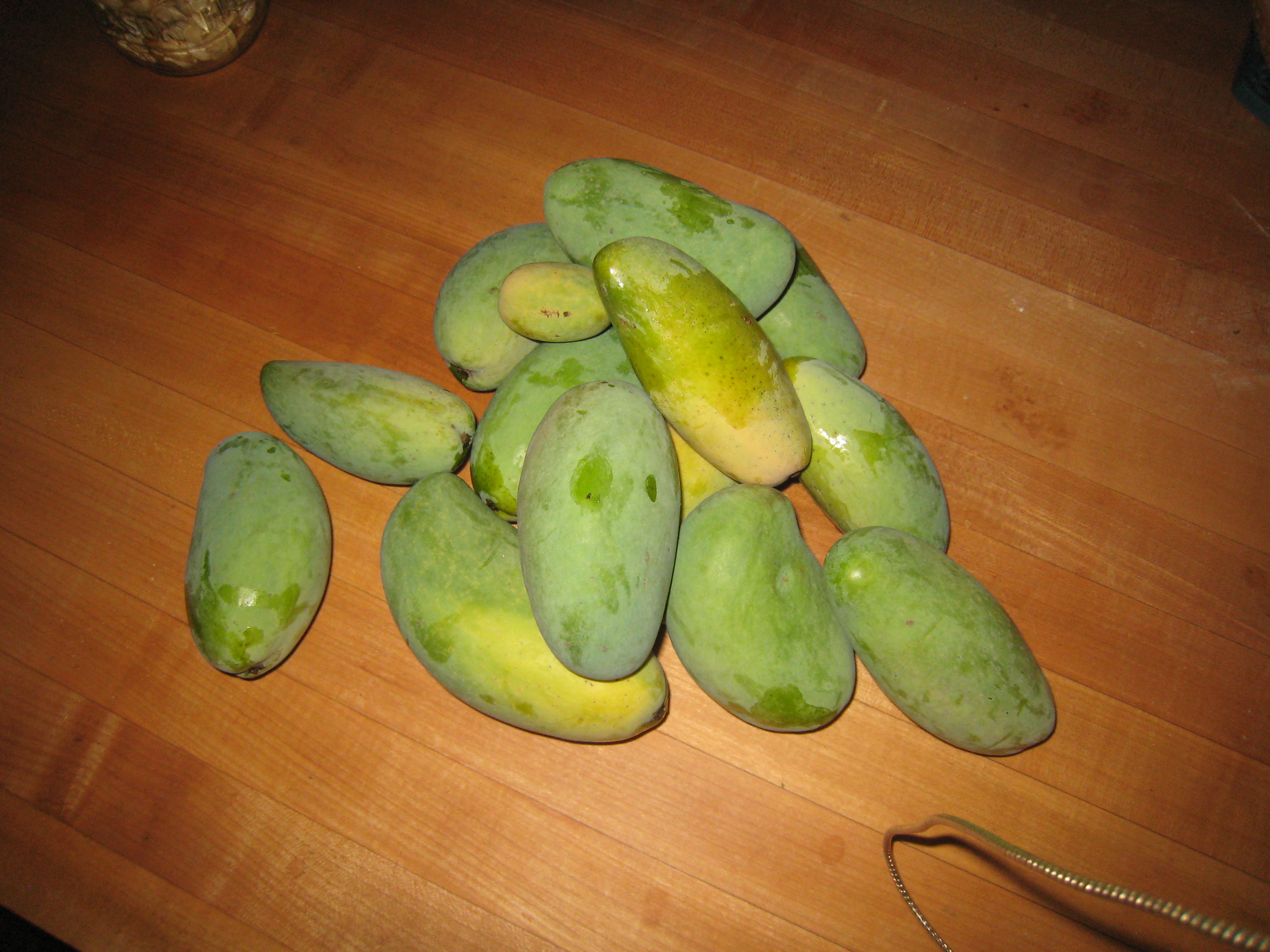
The offending mangoes
Around the same time I noticed some itchy bumps starting to appear on my arms and hands. Later, my eyes started to itch and swell a bit. To make a long story short, after developing rash on several parts of my body, I remembered learning that mango trees are on the same family as poison oak. The sap contains urishiol, the chemical responsible for poison oak/sumac/ivy rashes. Luckily, it is only in the sap (including leaves and skin of the fruit) but not the fruit meat.
Harvest Manager… peel me a mango, please!


 Save the Harvest