When Can You Do Something With the Squash? I need my wheelbarrow back.
The winter squash harvest came in the night before I left town on a three day business trip. Shortly upon my return The Gardener asked “When can you do something with the squash?”
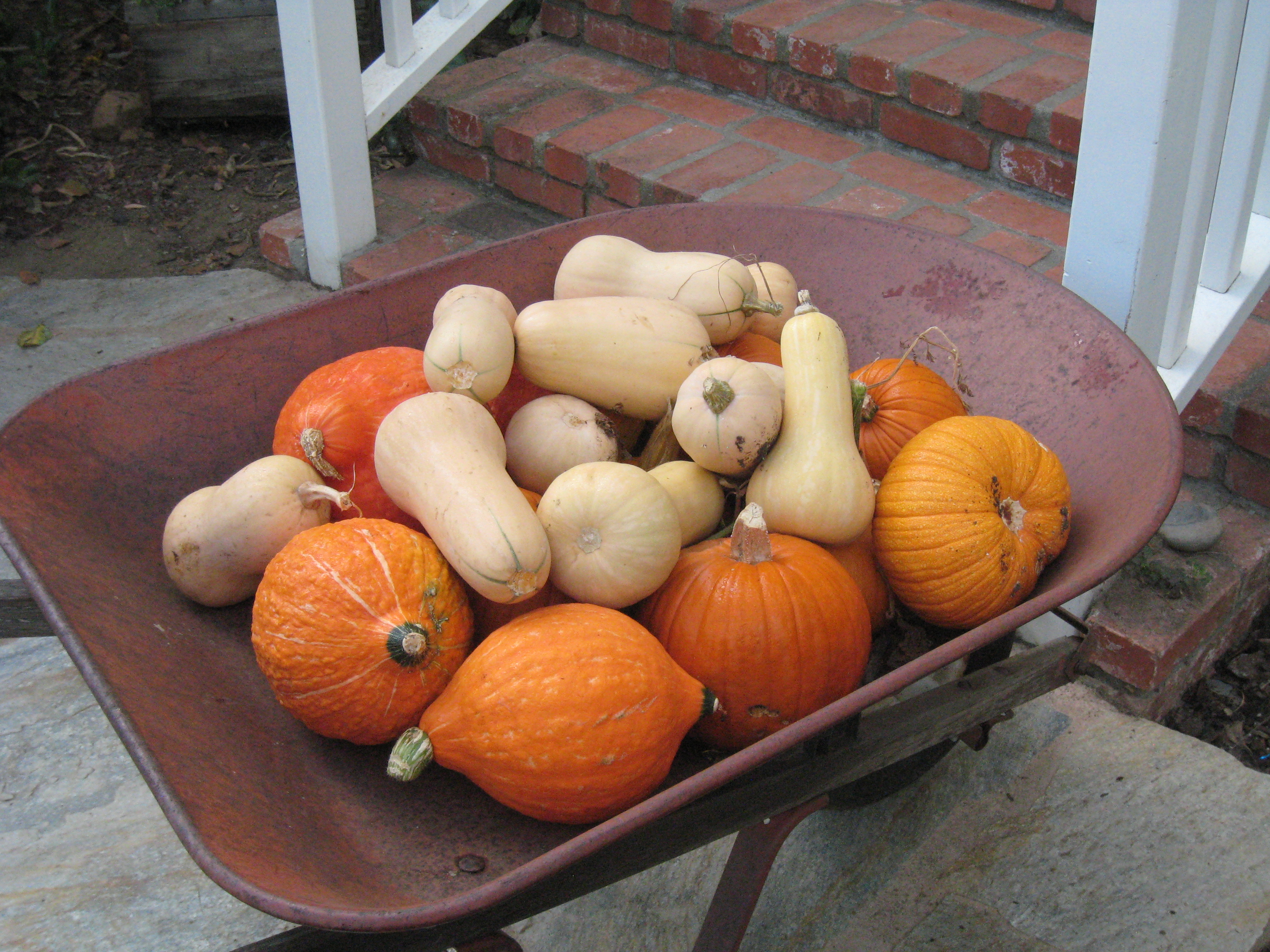
Hubbard and butternut squash with pumpkins
From the depths of post travel catch-up activities I assured him I have the squash on my “to do” list. No problem, it’s under control. “Good, thanks” he said. “I need my wheelbarrow back.”
Happily, winter squash is among the easiest harvests to manage. In this case it’s simply a matter of checking for blemishes or bugs, washing or brushing off garden dirt, and stashing the squash in a basket in the pantry. It will keep for months to come in a cool, dark, dry place.
Squash with compromised skins (like critter bites) get cut up and cooked right away. The easiest way to do that is cut out the bad spot, cut the squash in half, scoop out the seeds, turn cut side down on a cookie sheet, and bake. Just bake until soft – about 45 minutes at 350 degrees – then scoop out the cooked squash, put it in containers, and freeze.
Done and done. The wheelbarrow is back in service, and the squash is managed.
Bring Out the Big Guns
Last Tuesday The Gardener declared that the tomato harvest was winding down. On Thursday he announced that he was wrong while simultaneously delivering three large baskets to the kitchen. Alrighty then. The freezer is pretty much full, and a dozen or so jars of canned tomatoes grace the shelves. And yet, the tomato harvest continues. It’s time to bring out the big guns. I know this blog focuses on simple, can-do solutions for an abundant harvest. Ideally no special equipment is required. Today we’ll make an exception.
Bring out the Squeezo.
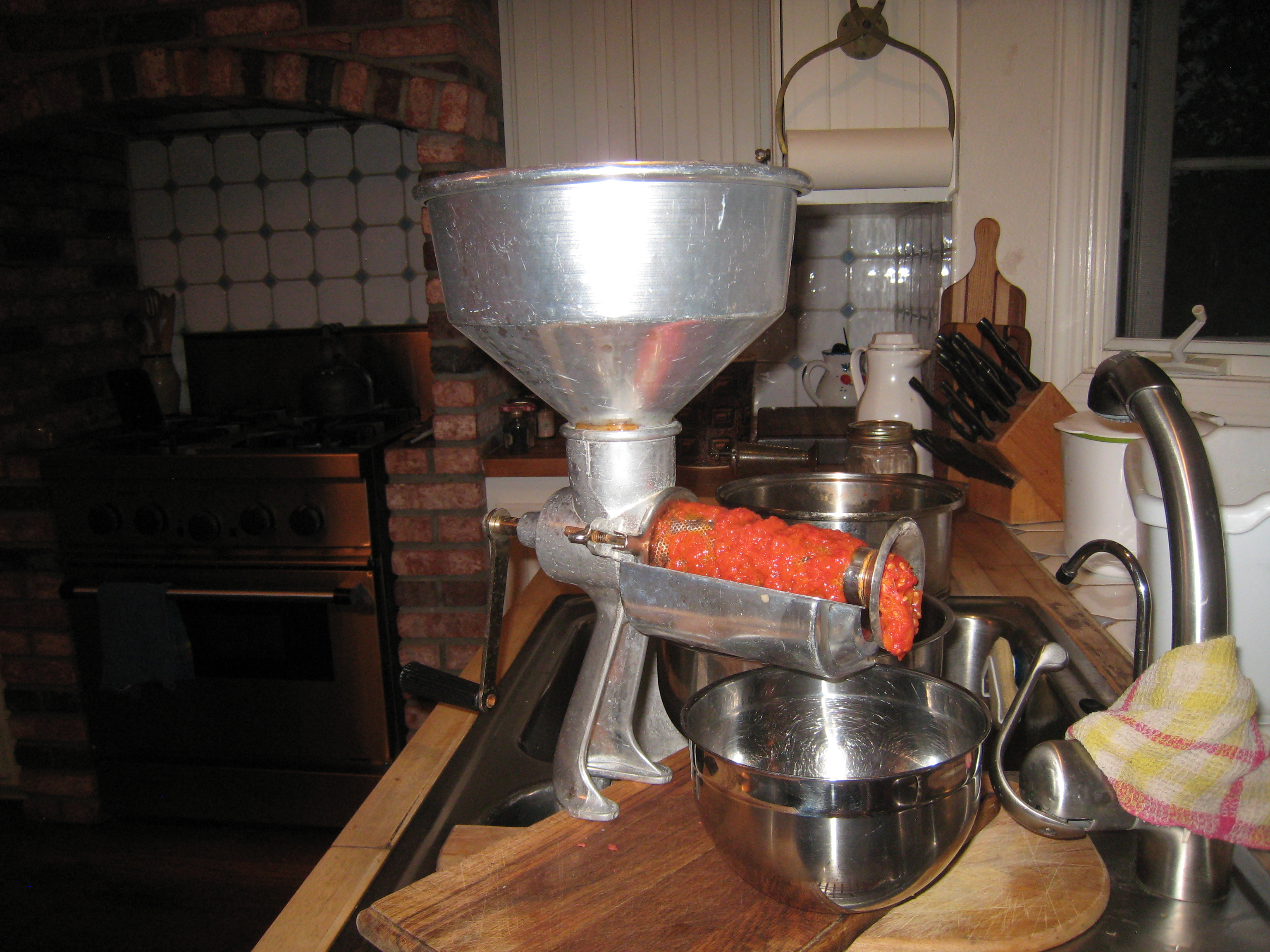
Squeezo Strainer
This little beauty has been in the Harvest Manager’s toolbox for about 30 years, and it’s still humming right along. (Although I notice last night it could use a new gasket.)
The Squeezo quickly and easily reduces 15 pounds of fresh tomatoes into a few jars (0r freezer containers) of rich, red sauce. Simply wash, core, and quarter the tomatoes. Drop them in a large pan and heat through. I usually bring them to a boil. Turn off the heat, and let them cool a bit.
Now, pour the tomatoes into the top funnel, turn the crank, and collect the sauce in one pan and skins/seeds in another. It’s really that simple.
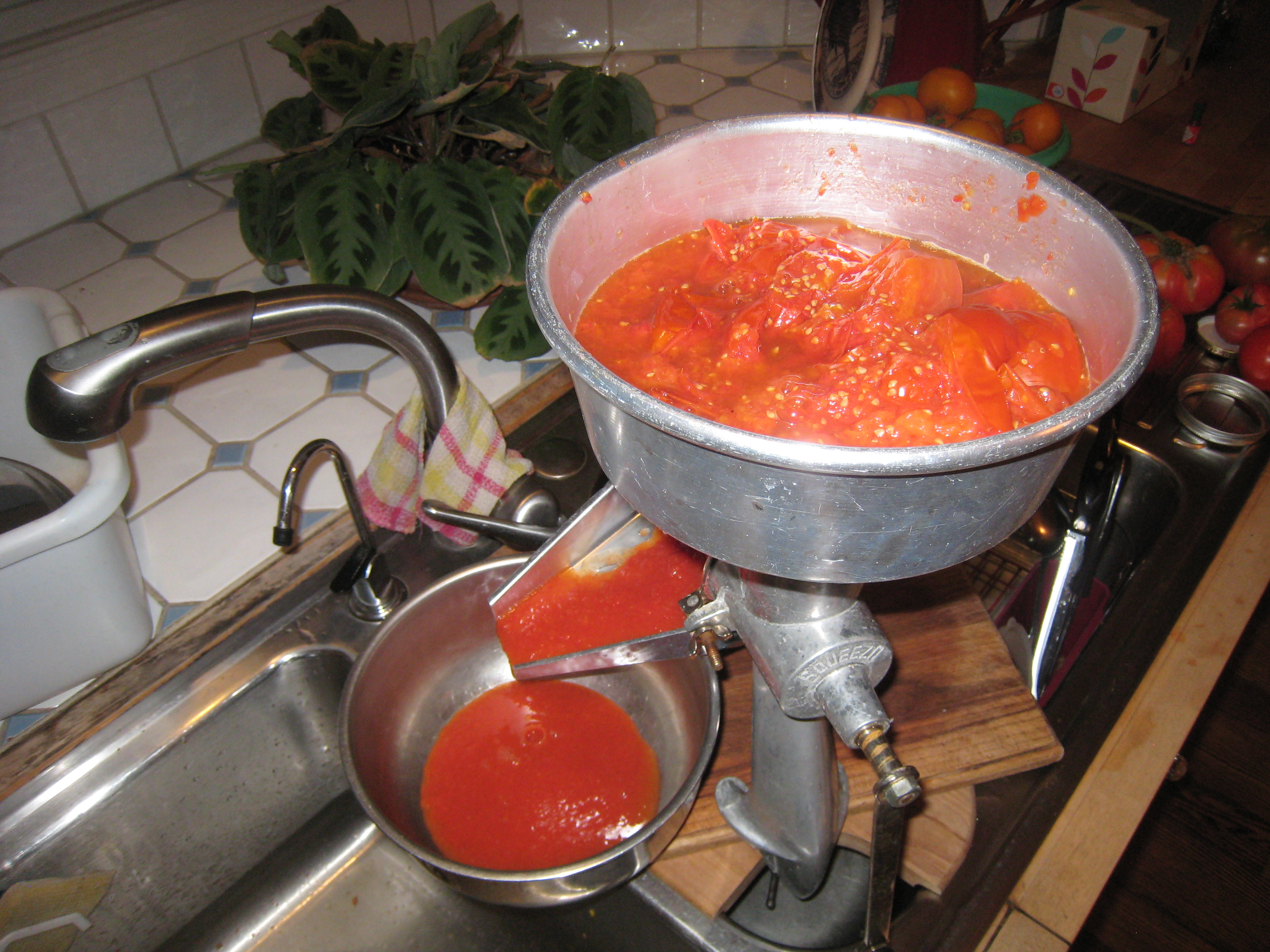
Squeezo with tomatoes
Another Front Yard Gardener Wins Over the Nay Sayers
A Drummondville Quebec front yard gardener gets to keep his garden after a petition convinced local officials to reconsider. Drummondville being where it is, the original article is in French, but here’s the gist. Cause leader Roger Doiron collected over 17,000 signatures asking city officials to let Josée Landry and Michel Beauchamp keep their garden. The petition convinced town officials to allow front yard gardens. In addition, the town announced that they will work with Josée and Michel to implement new guidelines allowing all residents who want them to create gardens.

The “offending” Drummondville front yard garden pictured on the Kitchen Gardeners International Blog
In an interview with Boing Boing blogger Rob Beschizza, Doiron said this action “helps establish a precedent that other urban and suburban gardeners can refer to when similar challenges arise in other parts of the world.”
Hooray for the gardeners!
The Dill Pickle Experiment – The Final Chapter
When we last left our dill pickles, they were beginning week 3 of the brining process. The Gardener, serving as official taste tester, had declared them dill enough and crispy enough but not sour enough. The brining continued for another few days until the Harvest Manager called time. Brining can’t go on indefinitely, and the pickles were as sour as they were going to get.
At this point the brine looked a bit suspect – cloudy with precipitation. So, I brewed up a batch of fresh brine and moved the pickles into smaller jars.
Brine (water and salt) creates pickles through fermentation. Fermentation creates lactic acid which, with the help of bacteria, preserves the food. Fermented cucumbers will 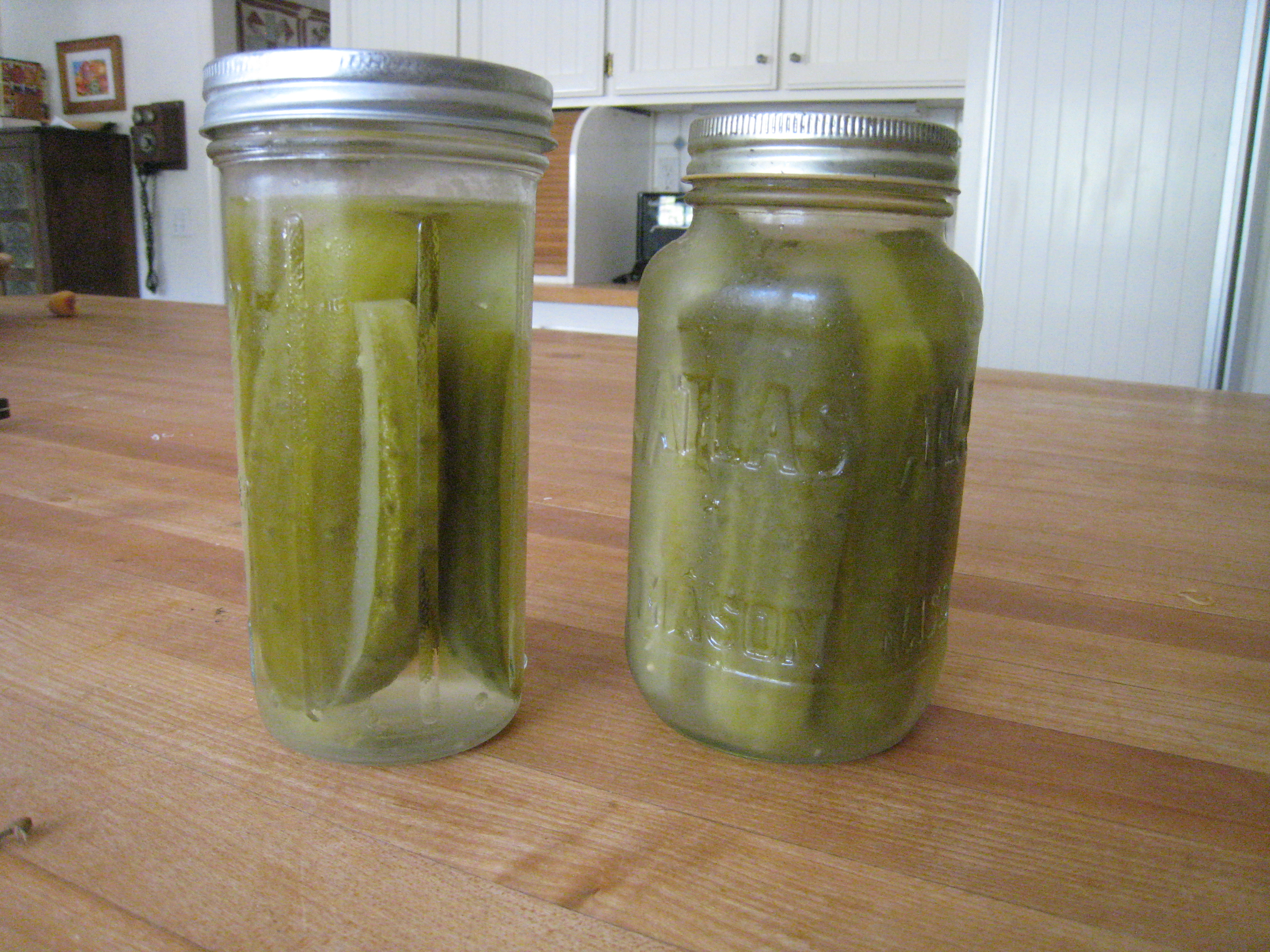 be sour and somewhat salty. These pickles did not undergo the water-bath processing, so they are stored in the refrigerator.
Our Dill Pickle Experiment yielded three quarts of pickle spears. The Harvest Manager gave one jar to an interested and supportive friend. Harvest Managers truly appreciate interested and supportive friends.
Garlic Happens
The Gardener has a friend. He is a good friend and a fellow gardener. The Gardener and his friend sometimes compete on matters of crop yield, variety, and harvest dates. Note: The Gardener is in Southern California; his friend is in the Pacific Northwest. Latitude matters. In any case, this year The Gardener’s garlic crop failed. He harvested only about 10 heads out of 50 planted.
His friend’s garlic crop did not fail. In a show of support and encouragement, his friend sent him this inspiring picture showing the year’s harvest, noting that it totaled 150 heads which are “a bit smaller than last year on average.” I’m sure he meant to offer sympathy over the crop failure.
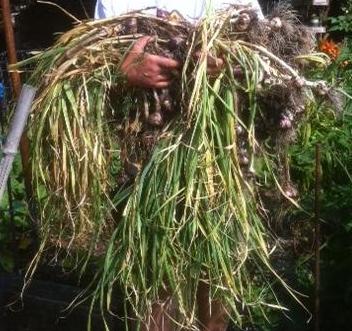
The Gardener still mourns his lost garlic, but he takes heart in the fact that the Southern California tomato harvest has begun.
Note: In the event the Harvest Manager had this much garlic to deal with, braiding would be the option of choice. For a great how-to video on garlic braiding, check out Christy Wilhelmi of Gardenerd.com. She’s done a really nice braiding demo that’s posted on YouTube.
The Dill Pickle Experiment – Update
On July 13th we set a gallon or so of pickles into a brine and began to wait. The goal? Sour, crispy, dill pickles. After one week we conducted a taste test.
- Crispy – check
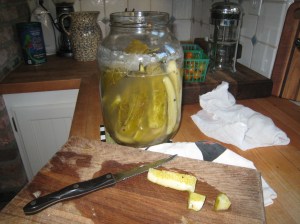
- Dill – check
- Sour – not sour enough
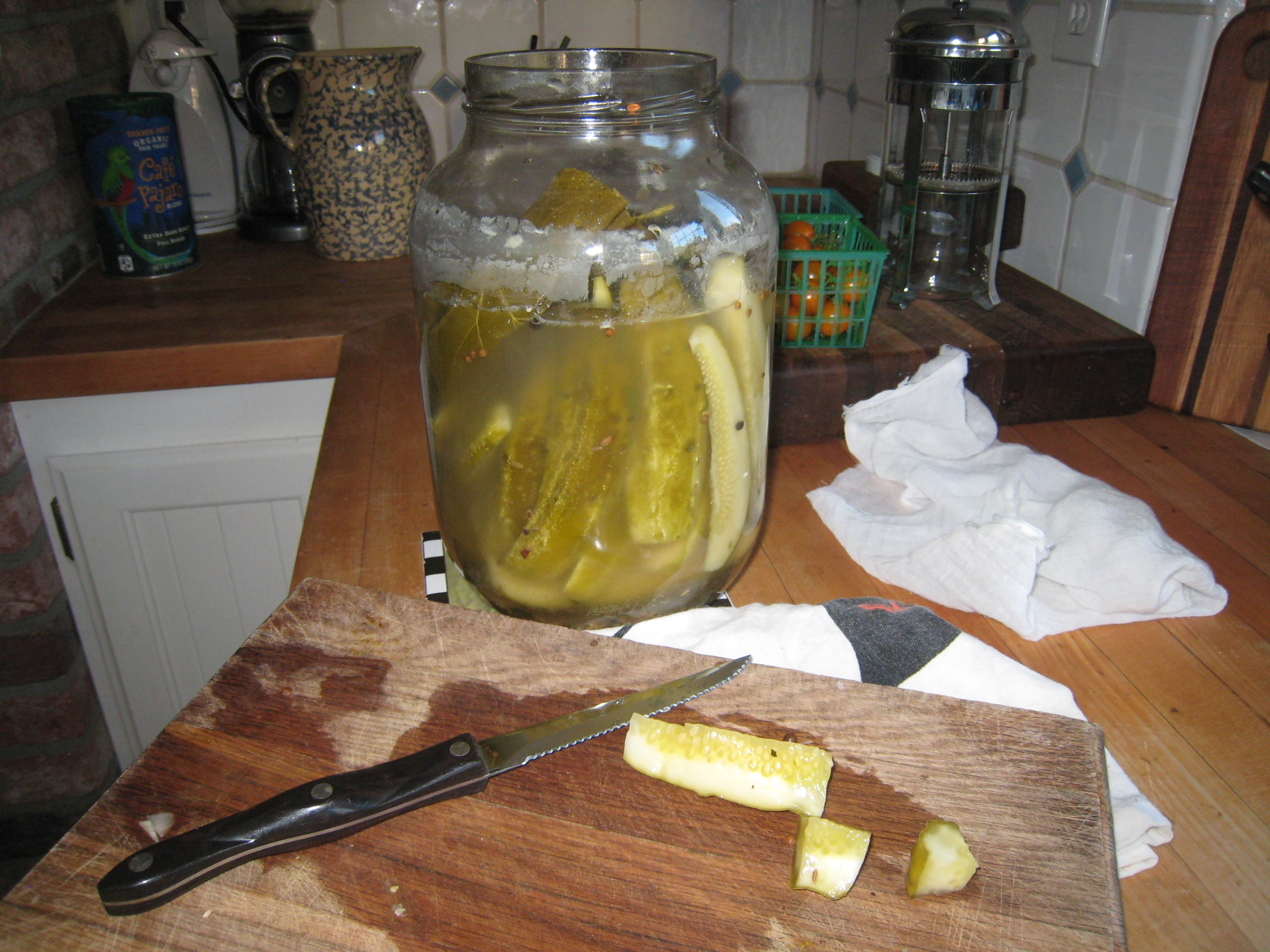
So, the brining continues. The second week’s taste test revealed a more sour pickle deemed still not quite sour enough. The brining can only go on so long before we risk spoilage. Thus, I think it likely that we’ll can these pickles sooner rather than later.
Thanks Marisa McClellan for the great pickling advice.
National Can-It-Forward Day
Today is National Can-It-Forward Day. 
Here’s what the Ball Corporation has to say:
“National Can-It-Forward Day lets everyone share the joy of fresh preserving. If you love garden fresh produce, we would love to show you how easy it is to preserve it to enjoy throughout the year. Whether you’re new to canning or are a Master Canner, we have recipes, tips and tricks to help make fresh preserving easy and fun!”
It’s easy. Really. Give it a try! If you can’t can, then head off to the nearest farmers market and buy some of the wonderful canned goods offered there.
USDA Farmers Market Search – search by Zip Code, products offered, or payment options. [The librarian in my loves this!!]
The Dill Pickle Experiment
I confess, I’ve had mixed success with dill pickles. Historically they come out too soft for my taste and probably everyone else’s taste as well. After all, don’t we all want a crunchy, crisp dill pickle?
Yesterday on NPR I heard an interview with Marisa McClellan talking about how to make crisp dill pickles. Timely to say the least, as The Gardener continues to bring in a pound or two of cucumbers every day. Marisa’s recipe doesn’t call for any special equipment or exotic ingredients, so I was able to give it a go as soon as the interview ended.
For the complete recipe, click on over to Marisa’s interview, and you’ll find it there. As for me, I didn’t follow it to the letter. I used a pickling spice I had already made for another project, and I increased proportions to accomodate 1.5 bounds of cucumbers. I also took a leap of faith and quartered the cucumbers lengthwise.
This is a test. I’ll keep you posted on how it goes, but I confess, I’m optimistic. So far so good.
-
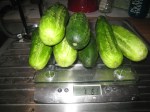
- One and a half pounds of cucumbers
-
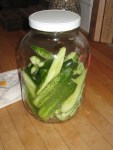
- Waiting for the brine
-
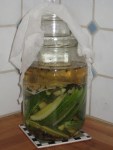
- The morning of the first day.
Beets Aplenty – Don’t Forget the Greens
The beet harvest is in. I didn’t weigh the bounty, but I’d ballpark it at about 10 pounds. We’ve eaten bunches, and I still have five pounds in the refrigerator. Happily for the harvest manager, beets come with greens. Yum! If you like Swiss chard, you’ll like beet greens. They’re related.
Beet tops cook up nicely. You can steam them with sliced beets. Alternatively, cut the greens into ribbons and saute with butter and garlic. Despite all this yummy-ness, one can only eat so much. Solution? Blanch and freeze those greens!
It’s easy. Wash the greens. I find three’s the charm. I wash them three times in a basin, pouring the water onto the outdoor shrubbery after each washing.
Next, pile a bunch of greens on top of each other and slice across the bunch to create strips. While you’re slicing, have a pot of water on the stove coming to a boil. Blanch greens in boiling water for two or three minutes, drain, and pack into freezer containers. Frozen greens will keep for months in the freezer, but they’re best if eaten within eight weeks or so.
-
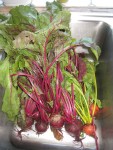
- Red and Golden Beets with Greens
-
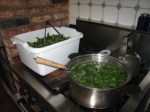
- Transfer two or three “tongs full” of greens from the basin to the boiling water to blanch for two or three minutes.
-
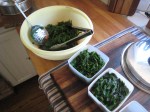
- Drain the blanched greens in a colander and pack in freezer containers.
Build a Food Forest
Occasionally this Harvest Manager runs across a brilliant food distribution/cultivation idea that just needs to be shared. Here’s today’s installment.
The Food Forest
A seven acre plot of land in the Beacon Hill neighborhood of Seattle will soon be planted with hundreds of different kinds of edibles including: “walnut and chestnut trees; blueberry and raspberry bushes; fruit trees, including apples and pears; exotics like pineapple, yuzu citrus, guava, persimmons, honeyberries, and lingonberries; herbs; and more. All will be available for public plucking to anyone who wanders into the city’s first food forest.” TakePart outlines the whole program and also answers the question ‘What if someone comes and takes all the blueberries?’
Doesn’t it just make you want to plant a food forest?


 Save the Harvest